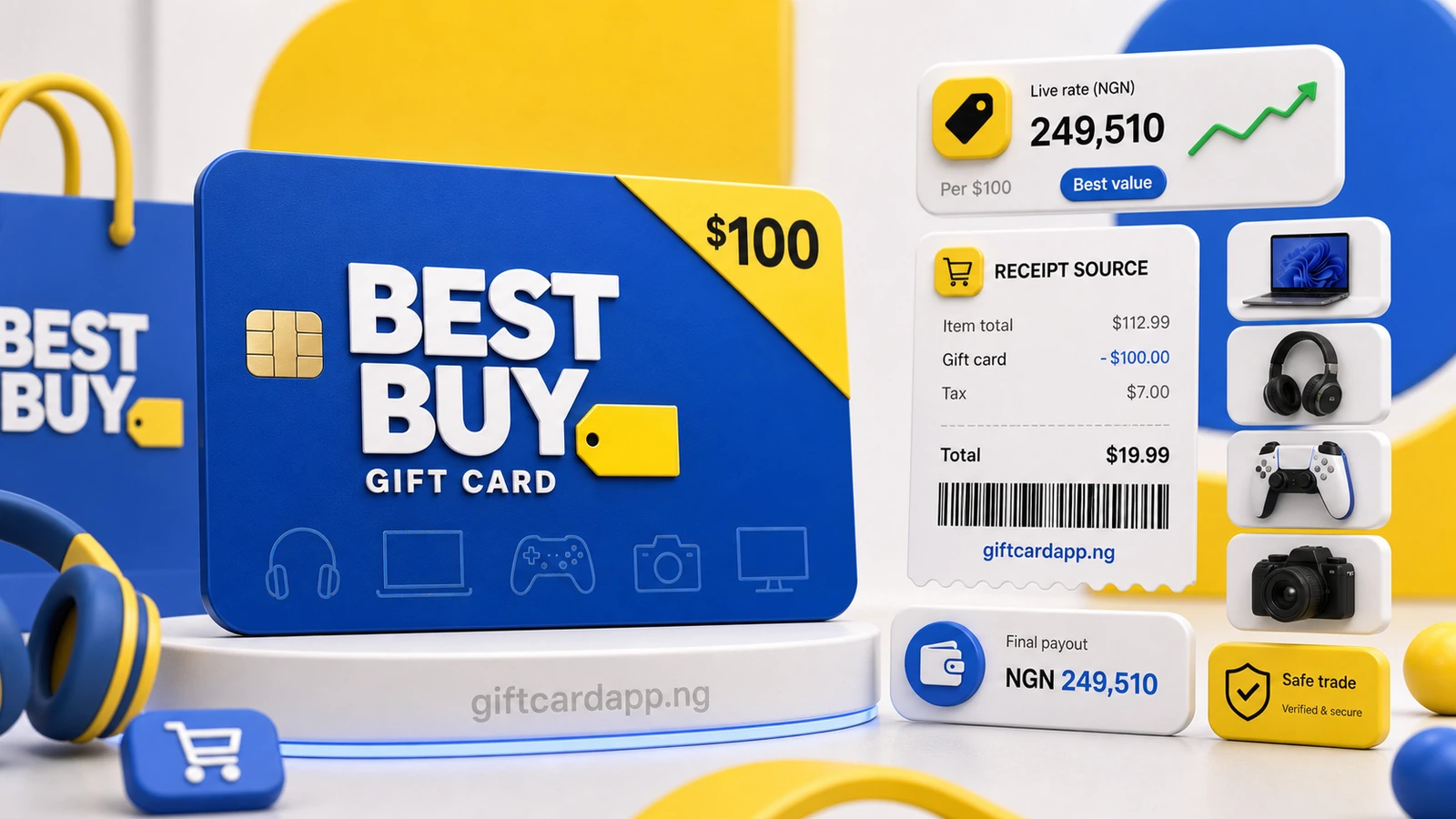
Many Gift Card submissions need clarification because the first message does not identify the exact product or the evidence is incomplete. For a Nigerian seller, the useful starting details are the brand, country or marketplace, currency, individual value, format and available proof.
This article diagnoses common submission errors. For the complete preparation sequence, use the Gift Card pre-sale checklist.
Seven common Gift Card submission mistakes
1. Asking for an estimate with only the brand
“How much for Apple?” does not identify the country, currency, denomination or format. A clearer description is: “Apple US, USD 100, eCode, original order email available, code not shared.” The details help select the relevant current route without exposing the redeemable value.
2. Selecting the wrong country or currency
A familiar brand can issue different products for the US, UK, Canada, Europe or another market. Do not choose a route from the brand name alone. Check the printed currency, retailer or marketplace, purchase record and applicable product terms.
3. Sending unreadable or incomplete physical-card photos
A cropped corner, glare over the denomination or blurred receipt can remove the context needed to identify a physical card. Provide the full front and back with the live code protected, then add a close-up only for a detail that is difficult to read. The physical Gift Card photo checklist covers lighting, framing and matching receipts.
4. Cropping an eCode screenshot too tightly
A code-only screenshot does not show the retailer, marketplace, value, currency or order timeline. Use the original delivery email or order page where possible, protect the claim code and keep enough source context visible. See the eCode email and order screenshot guide.
5. Mixing several cards and receipts
Ten unlabeled images do not show which value, country or receipt belongs to each card. List the individual denominations and use simple pairs such as Card 1 / Receipt 1 and Card 2 / Receipt 2. Equal total face value does not turn several codes into one card.
6. Revealing a redeemable code too early
A claim code or PIN can carry spendable value. Do not post it in a public group or send it to a contact who has not identified an official secure submission step. Share only the minimum information requested through the protected process. The guide to details to hide before Gift Card review explains the privacy boundary.
7. Treating an old rate screenshot as a current quote
A historical figure describes an earlier snapshot. It does not prove that the same route or multiplier is available now. Check the current product and data date close to submission time; use Gift Card rate history versus live rates for the full distinction.
Protect privacy without hiding useful evidence
Redaction should remove unrelated sensitive information while leaving the facts needed to understand the submitted card. Keep an untouched original for your records and make a separate protected sharing copy.
| Mistake | What becomes unclear or exposed | Better submission |
|---|---|---|
| Cropped email or receipt | Retailer, marketplace, product, value or date | Show the relevant source and order context |
| One total for several cards | Individual denominations and matching proof | List and label each card separately |
| Wrong country selected | Applicable currency and product route | Check the card, marketplace and purchase record together |
| Live code exposed | Control of redeemable value is put at risk | Cover the complete code until the secure stage requests it |
| Too much information hidden | The card cannot be connected to the claimed purchase | Keep brand, value, date and relevant source details visible |
| Unrelated personal data visible | Privacy is exposed without helping review | Hide addresses, payment details and unrelated messages on a copy |
A sender name, receipt or polished screenshot provides context; none of them alone proves authenticity, ownership, unused balance or route eligibility. Do not alter the value, date, source or other facts used for review.
Use one clear submission note
Prepare the details once, then keep the same labels beside the matching evidence. This avoids repeating partial information across several messages.
Copyable submission note:
Brand: [brand]
Country/marketplace: [country or marketplace]
Currency: [currency]
Individual value: [denomination]
Format: [physical card or eCode]
Proof available: [receipt, order email or other evidence]
Code status: protected and not shared
Request: current route and estimate
For a batch, repeat the same fields for every card or clearly identified group. Do not use one receipt for unrelated purchases or one route description for mixed countries and formats.
A two-minute pre-submission audit
- Route: Do the country, marketplace and currency match the product you selected?
- Value: Is every individual denomination listed rather than only the total?
- Format: Did you label physical card or eCode correctly?
- Evidence: Can the brand, value, source and relevant date be read without guessing?
- Matching: Is each card connected to the correct receipt or order record?
- Privacy: Are the claim code, PIN and unrelated personal or payment details protected?
- Timing: Are you checking current route data rather than relying on an old screenshot?
Frequently asked questions
What details should I include when asking for a Gift Card estimate?
State the brand, country or marketplace, currency, individual value, format and available proof. Keep the live code protected until the official secure stage requests it.
Can I submit several Gift Cards in one message?
Yes, but list and label each card, denomination, country, format and matching receipt or order record so the items cannot be confused.
Do clearer photos guarantee Gift Card approval?
No. Readable images can reduce uncertainty, but they do not prove authenticity, unused balance, ownership, eligibility or final payout.
Should I hide personal information on a receipt?
Hide unrelated addresses, payment details and purchases on a protected copy. Keep the retailer, Gift Card item, value, date and relevant reference visible where available.
Can I use last week’s Gift Card rate screenshot?
Use it only as historical context. Check the current product route and data date before treating any figure as a present estimate.
 How to Photograph a Physical Gift Card for ReviewJun 29, 2026
 How to Prepare eCode Screenshots for Review in NigeriaJun 30, 2026
 How to Share Gift Card Details Safely in NigeriaJun 20, 2026