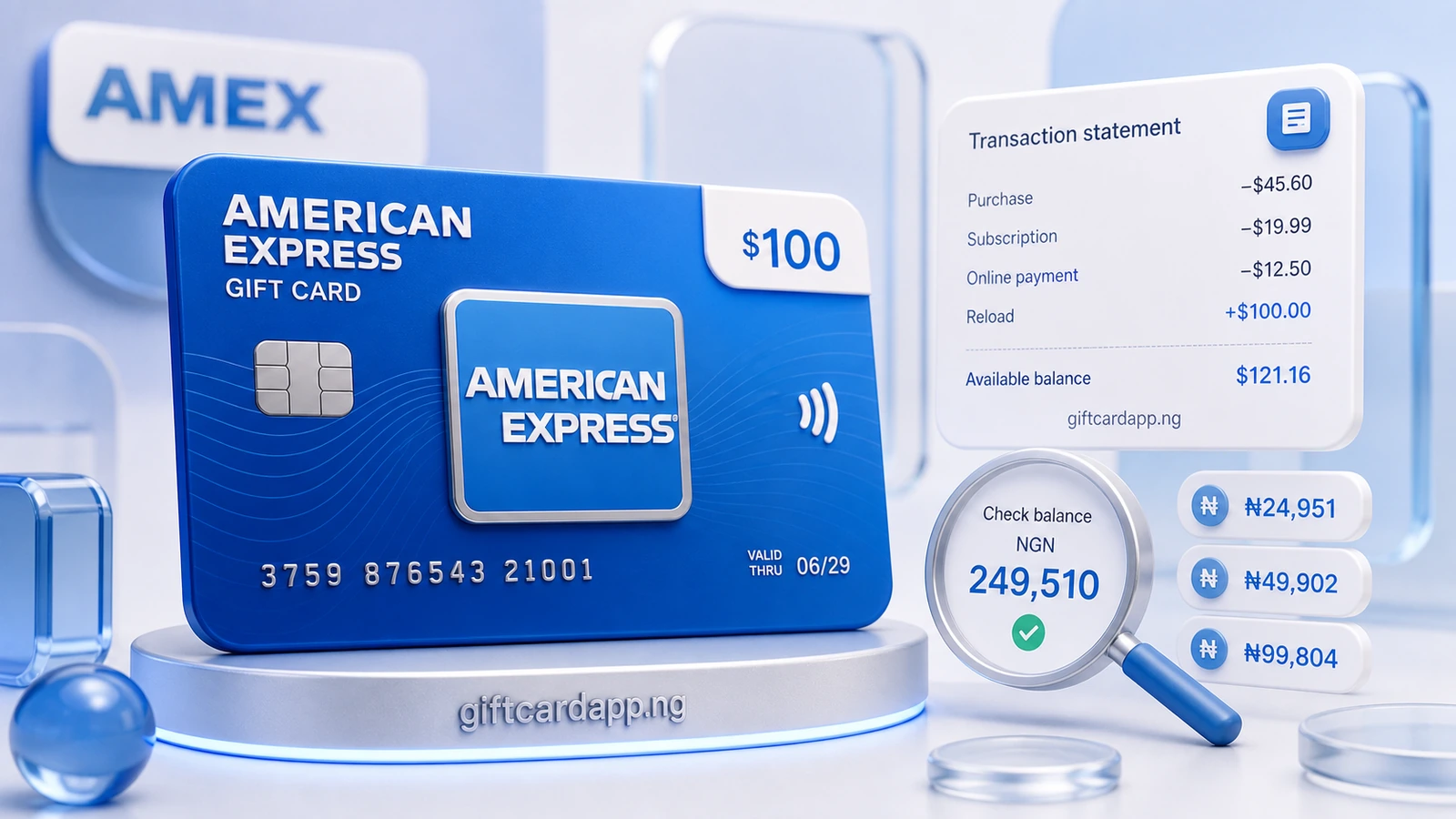
Gift Card rate history and a live rate answer different questions. Rate history shows how published estimates moved over a dated period. A live rate shows the current estimate for a specific card route. Neither is a guaranteed payout, and the final amount can only be confirmed after the card and its details are reviewed.
For a Nigerian seller, the practical rule is simple: use history to understand context, then use a current estimate to decide whether it is worth submitting the card today.
Rate history vs live rate at a glance
| Question | Rate history | Live rate |
|---|---|---|
| What does it show? | Dated past estimates and direction | The latest available estimate for a selected route |
| Best use | Comparing movement and volatility | Planning a possible submission now |
| What must match? | Brand, country, currency, value and format | Your exact card details and available route |
| Is it a final payout? | No | No; verification is still required |
What Gift Card rate history can tell you
A history chart can show whether estimates for a comparable card have been relatively steady or have changed often. This helps you recognise the difference between an ordinary movement and an unusual quote. It can also help you choose when to request a fresh estimate instead of relying on an old screenshot.
The comparison only makes sense when the observations describe the same route. A US Steam Gift Card is not interchangeable with a UK Steam Gift Card. A physical card may not follow the same route as an eCode, and a large denomination may be assessed differently from several smaller cards. Compare like with like:
- same Gift Card brand and product;
- same issuing country or marketplace;
- same currency and denomination range;
- same physical-card or eCode format; and
- a clearly stated observation date.
History is useful evidence of past movement, not proof of what a route will estimate next. For the wider reasons behind changes, read the guide to why Gift Card rates change in Nigeria.
What a live Gift Card rate means
A live rate is the most recent estimate available for the selected product route. It is more relevant than an older chart when you are deciding whether to start a trade, but it still depends on accurate inputs. Choosing the wrong country, currency, value or format can make the displayed figure irrelevant to the card you hold.
A live estimate may also change as demand, route availability or review conditions change. It does not establish authenticity, unused balance, ownership, acceptance or a final NGN payout. Use the current Gift Card rates page to check the route and data date, then use the Gift Card calculator for an estimate based on the details you selected.
A current estimate and its recent history
This US Steam $100 example separates the latest available route estimate from dated observations behind the trend. The current box supports a decision today; the history view supplies context. Both remain estimates until verification.
Date Rate Change Aug 30, 2026 NGN 1,059 / $1 +0.32% Aug 31, 2026 NGN 1,056 / $1 -0.28% Sep 1, 2026 NGN 1,059 / $1 +0.25% Sep 2, 2026 NGN 1,057 / $1 -0.23% Sep 3, 2026 NGN 1,058 / $1 +0.10% Sep 4, 2026 NGN 1,057 / $1 -0.02% Sep 5, 2026 NGN 1,058 / $1 +0.01%
Why the historical and current figures may differ
A difference does not automatically mean that either figure is wrong. First check whether you are comparing the same product and timestamp. Common reasons include:
- Different routes: country, currency, denomination or format does not match.
- Different dates: the chart records an earlier market observation.
- Route availability: a product route may be open, limited or unavailable at different times.
- Card-specific review: condition, readable details and supporting proof can affect whether the card is eligible.
- Input error: the wrong product option can produce an estimate for another card.
Do not use a historical high to demand the same figure today, and do not rely on an unusually high current quote without confirming the route and process. A dated screenshot is context only.
How to use both before submitting a Gift Card
- Identify the card: confirm the brand, issuing country, currency, face value and physical or digital format.
- Read the history: look at dates and movement for the matching route, not just the highest point.
- Check the current estimate: select the same route and note when its data was updated.
- Calculate carefully: make sure the denomination and quantity entered match what you actually have.
- Prepare proof: organise the relevant receipt, order record or clear card photos without exposing a redeemable code in ordinary messages.
- Wait for verification: treat the displayed NGN amount as an estimate until the review is complete.
If you want to understand how a displayed amount becomes a local estimate, see the $100 Gift Card to naira estimate walkthrough. Before sending evidence, use the submission mistakes checklist.
Questions to ask when the numbers do not match
A useful comparison is specific. Instead of saying only that you saw a higher rate before, ask:
- Does the historical observation cover this exact country and format?
- When was each figure last updated?
- Is the denomination supported by the route shown?
- Is the current number an estimate before verification?
- What card details or proof are needed to confirm eligibility?
These questions help separate a stale comparison from a genuine route change. They do not guarantee that a card will be accepted or that a particular payout will be available.
Frequently asked questions
Should I trust Gift Card rate history or the live rate?
Use history for dated context and the live rate for the latest available estimate. Neither is a final payout; card and route verification are still required.
Why is today’s Gift Card rate lower than yesterday’s?
First confirm that the brand, country, currency, value and format match. If they do, route availability, demand or review conditions may have changed since the earlier observation.
Can a rate-history screenshot confirm my payout?
No. It records a past estimate and may describe a different route. Use a current estimate and complete the required verification before relying on a final amount.
How do I compare Gift Card rates correctly?
Compare the same product route, including brand, country, currency, denomination and format. Also compare timestamps and confirm whether each figure is historical or current.
Does a live Gift Card rate guarantee acceptance?
No. A live figure is an estimate for selected inputs. It does not prove authenticity, balance, ownership or route eligibility, and it does not guarantee acceptance or payout.
 Why Gift Card Quotes Change Before Payout in NigeriaJun 23, 2026
 Gift Card Rate Multipliers Explained for NigeriaJul 2, 2026
 How Much Is a $100 US Gift Card in Naira?Jul 3, 2026