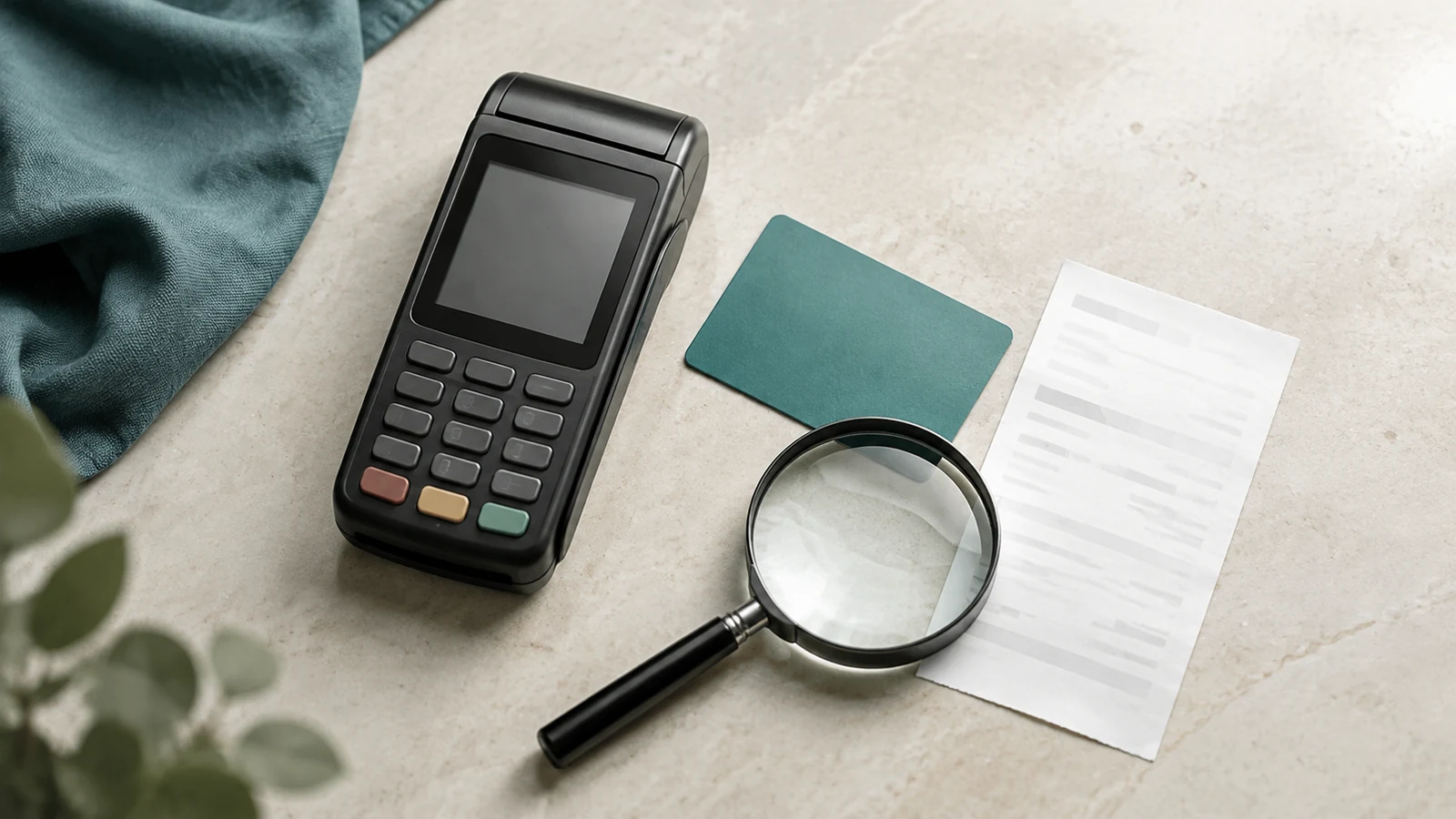
You check the gift card balance and the money is still there. Then the payment is declined again. That combination feels contradictory, but a balance check answers only one question: how much value the account reports. It does not prove that a particular merchant, amount or payment channel will receive an approval.
Quick answer: stop changing several things at once. Confirm the exact card type and issuer, check the available balance for holds, compare the full authorization amount with that balance, and record the merchant, channel and error. Then make one controlled correction or call the issuer. A card can be funded and still fail because it is not activated or registered, the billing details do not match, the merchant or channel restricts prepaid cards, a hotel or restaurant requests extra authorization, the card is outside its supported country, a spending limit applies, or the issuer flags the attempt.
This guide is for diagnosing a legitimate card you own. It does not promise that every gift card works everywhere, and it does not recommend disguising your location, inventing an address or routing the card through a payment service to bypass restrictions.
The Reddit question behind this guide
Recent Reddit posts repeat the same frustrating pattern: a card is activated or registered, the balance page shows funds, and online purchases still fail. In one July 2026 Vanilla gift-card discussion, the original poster later reported that an in-store grocery purchase worked even though other merchants had declined the card. In another July 2026 discussion about prepaid Visa cards and Amazon reloads, people reported that cards working elsewhere were declined for one specific transaction type.
Those are personal reports, not universal merchant policies. Their value is the question they expose: where did the authorization fail? Popular replies often jump straight to a workaround, complaint or different store. What is usually missing is a repeatable way to separate an amount problem from a merchant rule, address mismatch, regional restriction or issuer block.
First, identify what kind of card you have
“Gift card” can mean two different payment products:
- Store or platform gift card: value is normally redeemable only with the named retailer, marketplace or account system.
- Network-branded gift or prepaid card: a Visa, Mastercard, American Express or Discover mark may allow broader use, subject to the issuer agreement, merchant acceptance, card registration and geographic restrictions.
The support owner changes with the product. A retailer handles its own closed-loop gift card. For a network-branded card, identify the issuing bank or programme manager from the card, packaging or official balance site. Visa’s consumer page directs a cardholder whose funded card is declined to the issuer shown on the card, not to a random “Visa support” result. CardFlow’s gift-card error and evidence directory can help route common brand-specific errors.
A funded card can still fail at six checkpoints
| Checkpoint | What can stop approval | Best next action |
|---|---|---|
| Card status | Activation, registration, expiration or an issuer security block | Read the official status and call the issuer if it is unclear |
| Available funds | The final amount, tax, tip buffer or an earlier hold exceeds what is available | Compare the requested authorization with the available balance |
| Customer details | Online billing address or postal code does not match the issuer record | Use only the details the issuer permits you to register |
| Merchant or channel | The seller, website, wallet or transaction type does not accept that card | Ask the merchant what it accepts; do not assume |
| Country and currency | The card is domestic-only or otherwise restricted | Read the card and issuer terms before another attempt |
| Issuer decision | Fraud controls or spending limits block the authorization | Give the issuer the exact attempt details and ask for the reason |
Step 1: verify available balance, not just the printed value
Use the issuer website or phone number printed on the card or official packaging. Avoid sponsored look-alike balance sites. Record the available balance, pending entries and the time you checked. Do not post the full card number, PIN, expiry or security code.
A $50 card does not necessarily have $50 available after a prior authorization. If the attempted purchase is close to the remaining balance, include tax, delivery, service fees and any amount the merchant may request before the final total is known. CardFlow’s small-balance guide explains split payment and partial-authorization limits without assuming every checkout supports them.
Step 2: check for a larger temporary authorization
Hotels, car rentals, pay-at-the-pump fuel and restaurants can request more than the visible purchase amount. Visa says hotels and car rentals may place a hold, and a merchant or issuer may authorize a restaurant transaction for an additional 20% above the bill to allow for a tip. At a petrol station, Visa suggests paying inside if the pump transaction cannot be completed. See Visa’s current gift-card use guidance.
Do not turn “20%” into a universal rule. The precise authorization depends on the card, merchant and transaction. Ask the merchant what amount it will request and ask the issuer what amount is currently unavailable. If a pending hold already exists, repeated attempts can make the picture harder to read.
Step 3: separate activation from registration
Activation makes a card usable. Registration, when the programme supports or requires it, can associate permitted details such as a name, address or postal code with the card. They are not always the same step.
The U.S. Consumer Financial Protection Bureau lists a missing activation or registration, an address mismatch, a missing postal code, fraud alerts and spending limits among reasons an online prepaid-card purchase may be declined. Read the CFPB’s prepaid-card decline answer.
Use truthful information and only the issuer’s official registration route. If the programme does not allow registration for your card or country, a fabricated U.S. address is not a fix. It can create a second mismatch and may violate the programme terms.
Step 4: ask whether the merchant accepts this product and channel
A network logo does not tell you how every checkout is configured. An in-store terminal, website, subscription checkout, app wallet and gift-card reload can be treated differently. A card working once—or working at a different merchant—does not prove that the failing transaction should be accepted.
The CFPB says most network-branded prepaid cards can be used at many retail locations and online, but it also tells consumers to check the cardholder agreement for features and restrictions. That is a safer basis than a forum claim that a particular workaround “always works.” See where prepaid cards can be used.
Ask the merchant a narrow question: “Does this checkout accept non-reloadable prepaid gift cards for this product and transaction type?” The merchant can explain its acceptance rule. The issuer can explain whether it received and declined the authorization.
Step 5: use debit or credit only as the issuer allows
At some physical terminals, a prepaid card can be offered a debit or credit path. The CFPB explains that debit generally uses a PIN created for the card, while credit generally does not. Both still require sufficient available funds, and fees may differ. Read the CFPB debit-versus-credit explanation and the exact card agreement.
Do not invent a PIN or keep cycling through payment modes. If you never created a PIN and the issuer provides no PIN feature, ask which option the programme supports.
Step 6: verify the country rule before using a foreign-issued card
A U.S.-issued card may be restricted to U.S. transactions. Visa says a gift card marked “Valid only in the United States” is a domestic-use-only card and will not be accepted outside the United States. A successful balance check from Nigeria does not remove that restriction.
Do not use a VPN, false address or someone else’s account to make the transaction appear domestic. Confirm the card’s permitted country and currency with the issuer. If the programme allows international use, ask whether foreign or cross-border fees reduce the usable amount.
Step 7: make one controlled retest
After you identify and correct one specific issue, make one ordinary, permitted purchase with enough room in the available balance. Record:
- Date and local time
- Merchant and whether it was online or in store
- Purchase amount and full total
- Available balance immediately before the attempt
- Exact message shown
- Any pending entry that appeared
Stop if it fails again. Rapid attempts across many merchants can trigger more security checks and leave several pending authorizations. The goal is not to find a checkout that accidentally accepts the card; it is to obtain one clean data point that support can trace.
What to ask the merchant
Use a message like this:
I attempted a purchase of [amount] on [date and time] using a legitimate prepaid gift card. The card still shows sufficient available funds. Does this checkout accept this type of prepaid card for this product, and did your system submit an authorization or block it before submission? Please provide an order or attempt reference if one exists.
Do not send the merchant the full card number in ordinary email or chat. The last four digits and attempt reference are usually safer starting points.
What to ask the issuer
Call the official number on the card and ask:
My card shows [available balance]. A purchase of [amount] at [merchant] on [date and time] was declined. Can you see the authorization attempt? What decline category was recorded? Is the card active, expired, restricted, over a spending limit or blocked by a security control? Is there a pending hold reducing my available funds? What exact next step does this card programme allow?
Request a case number and a date for the next response. If the representative cannot see any attempt, return to the merchant: the checkout may have blocked the payment before it reached the issuer. If the issuer sees a decline, it is in a better position to explain the account-level reason.
When the problem is no longer just a decline
If the available balance falls after a failed checkout, distinguish a pending authorization from a completed purchase you do not recognize. Save a screenshot with credentials hidden, then contact the issuer. An unauthorized transaction or already-redeemed balance needs a dispute or recovery process, not more purchase attempts. Use CardFlow’s cross-brand recovery guide for that evidence sequence.
If a failed purchase is later cancelled and the value does not return, use the separate missing gift-card refund guide. A merchant cancellation, an authorization release and a posted refund are different events.
For readers in Nigeria
Start with the card’s country and programme terms, not the fact that the balance page loads. A card can show valid funds from Nigeria and still be domestic-only. Before treating the card as usable or submitting it for a legitimate CardFlow review, confirm the issuer, country, currency, pending activity and whether the card is under investigation.
Never send a buyer a full card number, PIN, CVV, account password or one-time code to “test” a decline. CardFlow cannot remove an issuer block or make a foreign card work at an unsupported merchant. Share only the minimum proof requested through the official CardFlow process after the card is confirmed legitimate and not disputed.
Frequently asked questions
Why is my gift card declined when it still has money?
The displayed balance does not prove that a specific authorization will be approved. Activation, address matching, available balance after holds, merchant acceptance, spending limits, country rules or issuer fraud controls may still stop the payment.
Can a wrong billing address cause an online gift-card decline?
Yes, for prepaid cards that use address verification. The CFPB lists an address or postal-code mismatch as a possible reason for an online decline. Use only truthful details through the official issuer registration process.
Should I choose debit or credit?
Follow the issuer’s terms and the terminal options. The CFPB says debit generally uses a PIN created for the card, while credit generally does not. Either path still needs enough available funds and may have different fees.
Why does the card work at one store but not another?
Different merchants, channels and transaction types can have different prepaid-card acceptance rules. Ask the failing merchant whether it accepts that product, then ask the issuer whether it received the authorization.
How much extra balance do I need at a restaurant, petrol station or hotel?
No single buffer applies everywhere. Visa says a restaurant authorization may include up to 20% above the bill and that hotels or car rentals may place holds. Ask the merchant and issuer for the exact authorization amount before purchase.
Should I keep retrying the card on different websites?
No. Correct one identified issue and make one controlled, permitted retest. If it fails, stop and contact the issuer with the merchant, amount, time, available balance and exact error.
Final takeaway
“Balance available” and “payment approved” are not the same status. A useful diagnosis follows the authorization path: card status, available funds, customer details, merchant acceptance, country rules and issuer decision.
Record one clean attempt, ask the merchant whether it submitted the authorization, and ask the issuer what it received. That sequence produces a better answer than trying ten stores and hoping one works.
Fact-checked September 8, 2026. By CardFlow Editorial Team. This guide provides general consumer information, not a guarantee of card acceptance, refund, replacement or legal outcome. Card and merchant rules can change; use the official terms for the exact product and transaction.
 How to Sell Gift Cards for Cash in Nigeria (2026 Guide)Jun 12, 2026
 Why Gift Card Quotes Change Before Payout in NigeriaJun 23, 2026