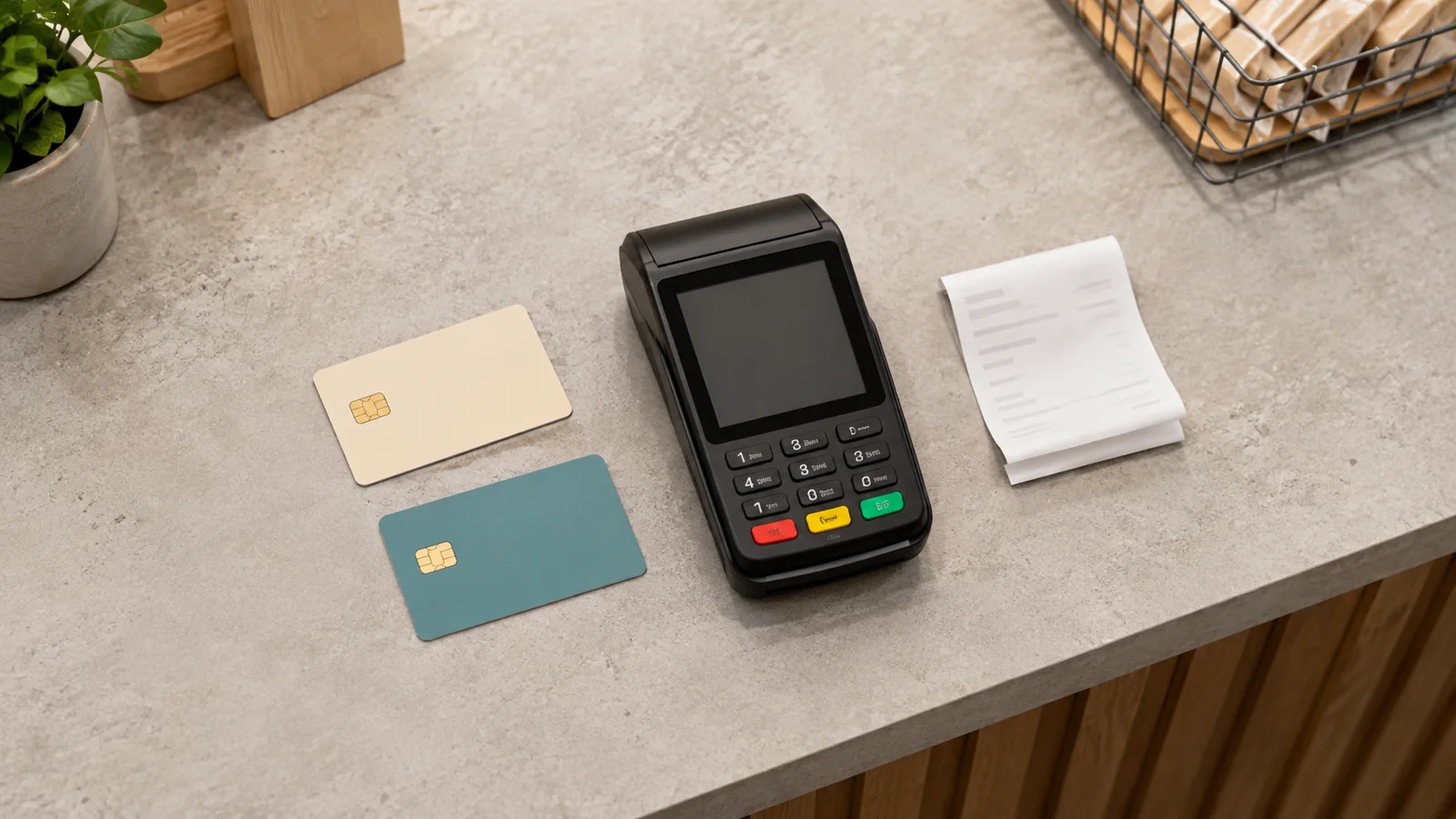
You have $3.47 left on a Visa gift card. Your next purchase costs $12.80. Surely the checkout can take the $3.47 and charge the rest to another card?
It can, if that merchant supports the payment split. Without that support, the checkout may ask your gift card for the full $12.80 and decline it. The money has not necessarily disappeared; the payment request may simply be too large.
Quick answer: check the available balance, confirm the card can be used with that merchant, then ask for a split payment for the exact amount. If an online checkout cannot split card payments, choose a purchase the card can cover in full or ask the issuer about permitted alternatives. A retailer gift-card reload is an option to investigate, not a guaranteed workaround.
For readers in Nigeria: this guide focuses on spending a remaining balance on a U.S.-issued Visa gift card. It does not mean that card can be used at Nigerian shops. Visa explains that cards marked for domestic U.S. use are not accepted outside the United States. Check your specific issuer’s terms before planning a purchase. See Visa’s gift-card guidance.
Why “just put it on Amazon” is an incomplete answer
In a May 2026 Reddit discussion about leftover Visa gift-card balances, a popular suggestion was to reload an Amazon balance. The follow-up question was the useful part: what if the remaining amount is below the reload minimum?
That is the gap this guide addresses. Before moving a few dollars anywhere, you need to know whether the amount is accepted, whether that exact prepaid card is eligible, and whether the resulting store credit is useful to you. Reddit comments describe individual experiences; they are not a payment policy or proof that a method works for every card.
Start with the checkout you actually intend to use. A clever workaround that leaves you with credit at a shop you never use has not solved much.
Check these four details before another attempt
- Exact card programme. Note the issuer and product name, not just the Visa logo. Gift cards, reloadable prepaid cards and research-reward cards should not be treated as interchangeable.
- Available balance. Use the official website or phone number printed on the card or its original documentation. Record the cents, currency and time checked. Do not rely on the amount printed on the packaging.
- Pending activity. Look for an unsettled purchase or authorization. If the portal’s figures are unclear, ask the issuer which amount is currently spendable.
- Merchant and location eligibility. Confirm the card’s country restrictions and whether the merchant accepts that particular product. A website displaying prices in dollars does not answer either question.
For the balance-check step, Visa directs users to their card issuer. CardFlow’s Visa and Mastercard balance-check guide covers safe evidence handling if you also need to document the result.
Keep a private note such as “card ending 1234 — USD 3.47 available — checked today.” Do not include the full card number or security code in a shopping list, Reddit post or message to a stranger.
How to ask for a split payment in a store
Ask before tapping, inserting or swiping the card:
“This prepaid gift card has $3.47 available. Can you charge exactly $3.47 to it and let me pay the rest another way?”
Give the cashier the amount, not the whole card history. If they say yes, let them choose the sequence their register supports. Some systems need a manually entered amount; others support a partial approval. Visa’s Partial Authorization Service guide describes that process, but it depends on merchant participation, policy and equipment.
Here is the arithmetic for an illustrative purchase. The total already includes any tax.
| Payment | Amount |
|---|---|
| Gift-card portion | $3.47 |
| Other accepted payment | $9.33 |
| Total paid | $12.80 |
If the register needs the other payment first, the target is still the same: leave exactly $3.47 outstanding for the gift card. Vanilla gives a similar pay-the-difference example in its spending guidance. Do not assume every cashier can follow the same order.
Before leaving, check that the receipt shows the intended amounts. If the second payment fails after a partial approval, ask the cashier to cancel or reverse the unfinished transaction and give you a record. A screen saying “declined” is not enough to explain what happened to the first part.
Online checkout: a saved card is not a shared balance
Adding two cards to an account does not instruct the shop to drain one and use the other for the difference. Look for an actual option to allocate a payment amount. If it is absent, ask support before submitting the order.
A useful question is:
“Can this checkout charge $3.47 to a prepaid Visa card and $9.33 to another payment method on the same order? I mean two payment sources, not instalments.”
For Vanilla, the issuer’s online-use guide says to enter the card in the credit/debit-card field, not the retailer’s gift-card-code field. It also says multiple-card use depends on the retailer and that an international merchant is not eligible for this U.S. product.
If no split is supported, compare the available balance with the final checkout amount. A $3.20 item can become a $3.60 purchase after tax, or much more with delivery. The price on the product page is not the amount you are asking the card to pay.
Use your own billing details and follow the exact issuer’s instructions. A made-up U.S. ZIP code, someone else’s address or a VPN is not a legitimate fix for an ineligible card or merchant.
When a retailer gift-card reload might make sense
Buying store credit with the remaining balance can be worth checking when you already shop with that retailer. Treat it as a new purchase with its own conditions, not as a transfer the Visa network promises to provide.
Before you submit it, answer four questions on the retailer’s current official checkout or with its support team:
- Can I enter this exact amount, or is there a minimum or fixed denomination?
- Is this prepaid card allowed as payment for a gift card or account reload?
- Will the resulting credit work for the items, country storefront and account I intend to use?
- Am I happy to keep the value with this retailer if the purchase succeeds?
Suppose your card holds $3.47 but the checkout requires at least $5. That route does not fit your balance. Do not round up and assume the shortfall will be collected elsewhere. This is a hypothetical example, not a statement of Amazon’s current minimum.
We do not give a universal Amazon reload minimum here: the relevant product and storefront need to be checked at the time. Nor do we promise that a card accepted for ordinary goods will be accepted for a reload. If the conditions do not fit, return to a permitted split payment or a purchase the card can cover.
Three things that look similar but are not
- Split payment: two accepted sources pay for one purchase.
- Combining balances: value from separate cards becomes one card balance.
- Cashing out: value becomes withdrawable money rather than a purchase payment.
Vanilla’s current help page says its gift cards cannot be combined or reloaded, and it does not offer ATM access, purchase cash back or bank-account balance transfers. Paying with multiple cards, where a retailer allows it, is different.
For a virtual card, first check whether that product supports a mobile wallet and whether the merchant accepts that wallet. A successful “add card” message only settles the storage step; it does not establish split-payment support or override the card’s restrictions.
What if it still declines, even for the exact balance?
Stop guessing after the basic checks. A correct amount does not rule out an authorization hold, product restriction or security block.
A hold is not the same as a completed charge. Hotels, fuel purchases and tipping environments can involve an authorization above the immediate purchase amount. Visa describes these situations in its gift-card FAQ. For a small remainder, a straightforward fixed-price purchase is easier to plan than a transaction whose final amount is not yet known.
A security decline needs issuer help. Vanilla’s decline guidance notes that safety controls can prevent a transaction even when funds are present. Repeatedly changing addresses or trying unrelated payment apps does not identify that cause.
Contact the issuer through the channel printed on the card. Have the merchant name, attempted amount, date and time, displayed error and any pending entry ready. Ask:
“Was this attempt declined, partially approved or authorized and then reversed? What amount is available now, and is there a restriction or release date I need to know about?”
If the merchant cancelled the sale, keep the cancellation reference. Ask the issuer when to follow up if the available balance has not recovered; do not assume every hold disappears on the same schedule.
An unfamiliar completed transaction is a different problem from a small balance. Report it promptly rather than trying to spend around it. Our gift-card recovery guide explains how to preserve evidence and track a disputed outcome.
Keep the card after you reach zero
Visa advises keeping a spent gift card if you may return something purchased with it. A merchant may return funds to that card. Store the physical card or original digital-card access securely alongside the receipt.
For a split purchase, ask which amount was refunded to which payment source. Check both records before deciding that a refund is complete. A “refund issued” email and a restored spendable balance are two different checkpoints.
Frequently asked questions
Can I use $2.47 on a Visa gift card toward a larger purchase?
Ask the merchant to charge exactly $2.47 and collect the rest through another accepted method. Proceed only if the merchant supports that split and the card is eligible there.
Can I combine two Visa gift cards for one online order?
Only if that checkout supports the required payment split. Saving two cards in your account does not combine their balances or automatically divide the charge.
Can I use a U.S.-only gift card in Nigeria?
A card restricted to domestic U.S. use is not a payment card for Nigerian shops. Confirm the issuer’s rules and merchant eligibility before attempting online use.
Will adding a virtual gift card to a wallet solve the problem?
Not by itself. Verify wallet support, merchant acceptance and the payment split separately. Adding the card does not remove its original restrictions.
What should I do with a balance below a reload minimum?
Do not submit a larger reload and expect automatic top-up from another card. Look for a permitted exact-amount split payment, or ask the issuer what alternatives your specific product allows.
Should I throw away a gift card after using its last cents?
Keep it securely until purchases and any returns are settled. If a refund is expected, check the card again rather than assuming the money went to your other payment method.
Fact-checked September 4, 2026. By CardFlow Editorial Team. This guide uses issuer and payment-network documentation; the Reddit discussion supplies question context, not policy evidence. Dollar figures are illustrative U.S.-dollar examples. Product terms and merchant checkout rules can change. No retailer acceptance, cash-out route or Nigerian resale eligibility is guaranteed.
 How to Sell Gift Cards for Cash in Nigeria (2026 Guide)Jun 12, 2026
 Why Gift Card Quotes Change Before Payout in NigeriaJun 23, 2026