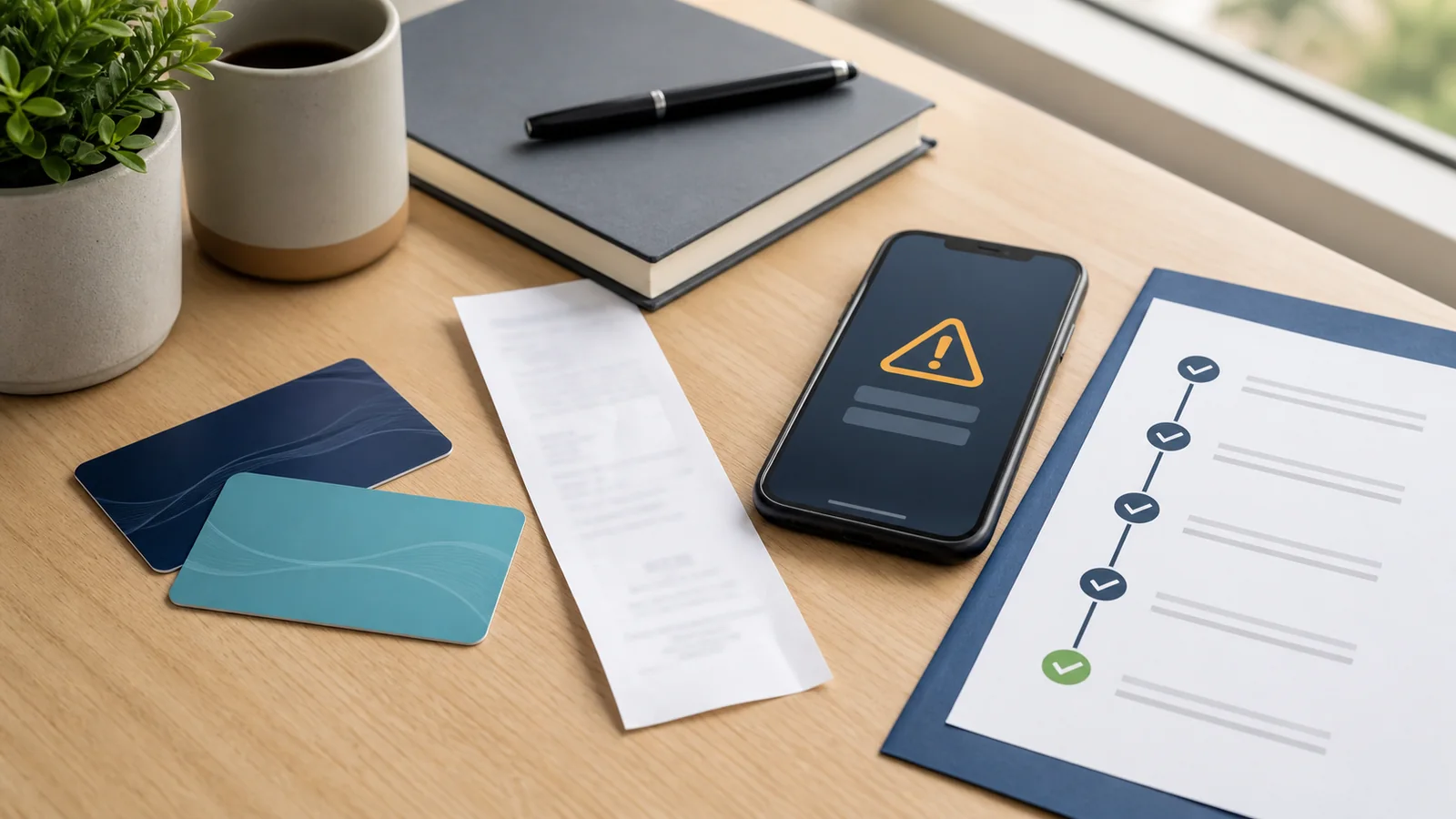
“Already redeemed” sounds like a complete answer. It is not. It tells you that the issuer’s system considers the code used, but it does not tell you whether the value reached your own account, another account, or a transaction that now needs investigation.
That distinction matters in Nigeria, where a card may have been bought abroad, sent as a digital gift, purchased from a local reseller, or passed through more than one person before it reaches the intended user. The practical job is to work out who can see the relevant record, give that party clean evidence, and keep the case open until there is a real result.
This guide covers retailer gift cards such as Apple and Google Play, as well as general-purpose prepaid cards carrying a network mark such as Visa or Mastercard. Visa and Mastercard are payment networks; the issuing bank or programme manager named on the card controls the account. These support routes are not interchangeable.
“Already redeemed” is a status, not a diagnosis
An already-redeemed message normally points to one of four situations:
- The value is already in your account. You redeemed it earlier, or the balance display has not refreshed.
- The code was used in another account you recognise. A second personal account or a family member may have redeemed it.
- The code was exposed before you received it. Someone may have copied a physical code, accessed a digital delivery, or seen an unredacted image.
- The sale or activation record is wrong. This is more likely when the error is actually “not activated” or “invalid,” but the receipt and retailer record can still be important to an investigation.
Do not assume theft from the error message alone. Also do not let anyone persuade you that repeated attempts, a VPN, a paid “unlock,” or sending the full code to a stranger will reveal what happened. Those steps can create more risk without improving the evidence.
Start with one private account check
Before contacting support, take five minutes to rule out the simplest explanation. Use only the issuer’s official app or website.
- Confirm the exact account. Check the email address or account ID currently signed in. If you use more than one account, inspect each one you control.
- Check the balance and recent transactions. Look for the card value, not only the original redemption screen.
- Refresh the session once. Sign out and back in if the issuer recommends it. Apple specifically advises this when an Apple Gift Card appears already redeemed.
- Ask only people who legitimately had access. A household member may have redeemed the code, but do not circulate it again while asking.
- Save the exact error. Take a screenshot that shows the message, date and account context without exposing the full redeemable code.
Google says an already-redeemed Play code cannot be redeemed again and that the credit should appear in the Google Play balance. It recommends checking the same account and people who may have had access. Google also says it will not reveal information about the account where a card was redeemed, for privacy and security reasons. That means “tell me who used it” may be a question support cannot answer, even when it can investigate the card.
Apple’s guidance is slightly different in wording but similar in logic: sign out of the App Store or iTunes Store on all devices, sign back in, and check the Apple Account balance. For a deeper Apple-specific route, see CardFlow’s Apple Gift Card already-redeemed guide for Nigerian users.
Route the case by card type and failure point
The logo on the front does not always tell you who owns the problem. Read the card terms, purchase confirmation and the support details printed on the card or shown in the official order email.
| Card or error | First useful check | Best first contact | What to request |
|---|---|---|---|
| Apple Gift Card says already redeemed | Apple Account balance after signing out and back in | Apple Support if the value is still missing | Redemption investigation using the card, receipt and serial number |
| Google Play code says already redeemed | Play balance on every account you control | Google Play Support if the balance is absent | Review of the redemption error; expect account-identity limits |
| Physical retailer card says not activated | Receipt and activation line on the till record | The retailer that sold it | Activation correction or documented refusal for issuer follow-up |
| Digital store code was never delivered or arrived exposed | Order status, recipient address and delivery timestamp | The seller or authorised retailer | Delivery trace, cancellation if possible, or replacement review |
| General-purpose prepaid Visa or Mastercard has missing funds | Official balance and transaction history | The issuing bank or programme manager named on the card | Transaction dispute, freeze or replacement process |
| Card bought from an individual reseller | Issuer status plus seller invoice and messages | Issuer for status; seller for the commercial dispute | Written issuer finding and the seller’s remedy |
Build one evidence pack before you explain the story
The awkward part of support cases is that the customer knows the story, while the investigator sees only disconnected fields. A short, organised evidence pack makes those fields easier to match.
Keep the pack private and include:
- the full front and back of a physical card for official support only;
- the purchase receipt or digital order confirmation;
- the card serial number, which may be different from the redeemable code;
- the date, time, amount, currency, store and country of purchase;
- the exact error message and the time you saw it;
- the account email used for your legitimate redemption attempt;
- the seller’s invoice, listing and relevant messages if a reseller was involved; and
- every case number, response and promised next step.
Apple says support may ask for images of the front and back of the card, a sales receipt and the card’s serial number. The U.S. Federal Trade Commission also advises consumers to keep the card and store receipt when reporting a gift-card scam or asking the issuer whether money can be returned.
That does not mean posting these items in a forum. Redact the redemption code, PIN, barcode, QR code, full account number, passwords and one-time codes from public screenshots. CardFlow’s safe evidence-sharing checklist shows what should stay hidden during a review.
Use a case summary support can act on
A long emotional message can bury the facts. Lead with the disputed result and the remedy you want. For example:
I purchased a [brand and value] gift card from [seller] on [date and time]. On [date and time], I attempted to redeem it to [masked account identifier, for example m***@example.com] and received “already redeemed.” I checked the balance and the value is not present. The code was not knowingly shared before this attempt. I have the original card, receipt/order confirmation, serial number and screenshot. Please investigate the redemption status and confirm whether the available remedy is a restored balance, replacement, refund, or a written final decision. My case number is [number].
If a detail is uncertain, say so. Do not claim a named person stole the value unless you have evidence that establishes it. “The code was visible to the seller and recipient” is a verifiable statement; “the seller redeemed it” may only be a suspicion.
Ask questions that create a usable record
Support may be unable to disclose another customer’s identity, but it should still be possible to ask process questions:
- Has my proof of purchase been accepted?
- Is this being handled as an activation issue, redemption issue, unauthorised transaction or seller dispute?
- Which team owns the next step: retailer, issuer, programme manager or fraud team?
- Is any additional document required from the original purchaser?
- What outcome is under review: restored balance, replacement, refund or no remedy?
- When should I follow up, and through which case number?
- If the request is denied, can I receive the reason and escalation route in writing?
Do not open five duplicate tickets for the same incident unless the company tells you to do so. Add new evidence to the existing case and keep a dated record of each contact.
A support ticket is not a recovered gift card
This is where many public discussions end too early. “Support said a replacement is coming” is progress, but it is not proof that the replacement arrived, carried the correct value, or worked.
| Case stage | Evidence to retain | Is the case closed? |
|---|---|---|
| Ticket opened | Case number and submission copy | No |
| Receipt or ownership evidence accepted | Written acknowledgement | No |
| Refund or replacement approved | Approval message, amount and delivery method | No |
| Replacement delivered | Delivery record and masked card details | Not until the value is verified |
| Refund received | Bank, wallet or payment statement | Yes, if the amount is correct |
| Balance restored and usable | Official balance and one legitimate test transaction if appropriate | Yes |
| Final denial received | Written reason and escalation route | Closed with no remedy, or ready for escalation |
If a replacement arrives but fails, do not start the whole story again. Reply in the existing case with the replacement reference, the new error and the delivery evidence. Ask the company to connect the failed replacement to the original investigation.
Refunds, replacements and chargebacks are different remedies
A restored balance returns value to the intended account. A replacement issues a new card or code. A refund returns money through an approved route. A chargeback or card dispute asks the bank that funded the purchase to investigate the purchase transaction.
None is automatic. Gift card terms often restrict cash refunds, and an issuer may require proof that you are the purchaser or intended recipient. A bank dispute also does not guarantee reversal. Describe the transaction accurately and follow the bank’s evidence process; do not label an authorised purchase “unauthorised” merely because the gift card later failed.
For a general-purpose prepaid card issued in the United States, the U.S. Consumer Financial Protection Bureau says registration can be important for certain protections and provides a complaint route after the consumer has tried the company. That is U.S. information, not a statement of Nigerian law and not a promise that every gift card qualifies.
When a Nigerian user should escalate
Start with the seller or issuer that controls the relevant record. If the issue involves a Nigerian business and the provider’s complaint process does not resolve it, the Federal Competition and Consumer Protection Commission’s complaint guidance explains how consumers can submit a complaint with supporting documents.
If the facts point to cyber-enabled fraud, account compromise or stolen credentials, the Nigeria Police Force National Cybercrime Centre provides an official e-reporting portal. A police report is not a substitute for notifying the issuer quickly, and neither route guarantees recovery.
For U.S.-issued general-purpose prepaid products, the CFPB says consumers who have already tried the company may submit a complaint; it says companies generally respond through that process within 15 days. That timing belongs to the CFPB complaint process. It should not be presented as a deadline for Apple, Google, a Nigerian reseller, a bank, or every gift card investigation.
What not to do while the card is disputed
- Do not publish the full code, PIN, barcode, QR code or unredacted receipt.
- Do not pay a stranger to “trace,” “unlock” or “reload” the card.
- Do not use a VPN or false account details to bypass country restrictions.
- Do not run repeated small transactions that could complicate the record.
- Do not resell or trade the card while its ownership or balance is disputed.
- Do not delete the original seller conversation after taking screenshots.
- Do not treat a verbal promise as the final result; request the case number and next step in writing.
Can you sell or trade an “already redeemed” gift card?
No—not as a valid unused card. Until the issuer confirms that usable value exists and you have the right to transfer it, the card should remain quarantined from trading. Disclose the dispute to any legitimate platform handling a support case, but never pass the loss to another buyer.
If support restores or replaces the value, check the issuer’s transfer, resale, country and account rules before doing anything else. Some store balances cannot be transferred after redemption, even between accounts owned by the same person.
Frequently asked questions
Does “already redeemed” prove the card was stolen?
No. It proves only that the issuer’s system records the code as used. Check your own balances and accounts first, then ask the issuer to investigate if the value is missing.
Can support tell me which account redeemed the card?
Not necessarily. Google expressly says it cannot share information about the Google Account where a gift card was redeemed for privacy and security reasons. Other issuers have their own disclosure rules.
Can I get a refund without the receipt?
You can still ask, but the receipt or digital order confirmation is often important proof of purchase. If another person bought the card for you, ask that purchaser to retain the original record and join the official support process if needed.
How long should an already-redeemed investigation take?
There is no single cross-brand deadline. Ask for the company’s stated follow-up date and keep it in the case log. The CFPB’s “generally within 15 days” statement applies to company responses routed through its U.S. complaint system, not to all gift card cases.
What if support promises a replacement but it never arrives?
Keep the original case open, confirm the delivery method and address, and request a trace or reissue in writing. Approval is not the same as delivery.
What if the replacement card also fails?
Reply through the original case with the replacement reference, exact new error and delivery evidence. Ask support to link the failed replacement to the first investigation instead of treating it as an unrelated card.
Should I contact the retailer or the issuer first?
Contact the retailer first for a purchase, delivery or activation failure. Contact the issuer for an already-redeemed status, missing balance or transaction record. If a reseller was involved, you may need the issuer’s written finding before pursuing the seller dispute.
The practical finish line
The best case file is not the longest one. It is the one that shows ownership, timing, the exact failure, the party responsible for the next step, and the final result.
Keep the disputed card private. Use official support. Track one case. And do not call the matter resolved until the promised value is actually back under your control—or you have a written decision that tells you what can be challenged next.
Editorial note: This article provides general consumer-safety information, not legal advice or a promise of recovery. Brand and government guidance was checked on September 2, 2026. Policies, support routes and eligibility can change; verify the current terms on the issuer’s official website.
Official sources
- Apple Support: If you can’t redeem your Apple Gift Card
- Google Play Help: Fix problems with gift cards and codes
- U.S. Federal Trade Commission: Avoiding and reporting gift card scams
- U.S. Consumer Financial Protection Bureau: Prepaid cards and other prepaid accounts
- Federal Competition and Consumer Protection Commission: Complaint handling
- Nigeria Police Force National Cybercrime Centre: E-reporting portal
 How to Sell Gift Cards for Cash in Nigeria (2026 Guide)Jun 12, 2026
 Why Gift Card Quotes Change Before Payout in NigeriaJun 23, 2026