The October 7 Maryland announcement
On October 7, 2026, the U.S. Attorney’s Office for the District of Maryland announced an indictment alleging that stolen credit cards were used to buy gift cards. The defendant faces 21 counts of wire fraud and 21 counts of aggravated identity theft. Prosecutors allege that 21 people were affected, with losses of $53,300.49.
The announcement says investigators began looking into complaints in July 2021 after a financial institution reported that customers had not received credit cards and that unauthorised charges followed. The October announcement is recent; the alleged conduct should not be presented as something that first happened this week.
An indictment is an accusation, not a conviction. The defendant is presumed innocent until proven guilty. This article draws a purchasing-evidence lesson from the allegations; it does not decide the case or identify any reader’s card as fraudulent.
The distinction: funding, activation and balance
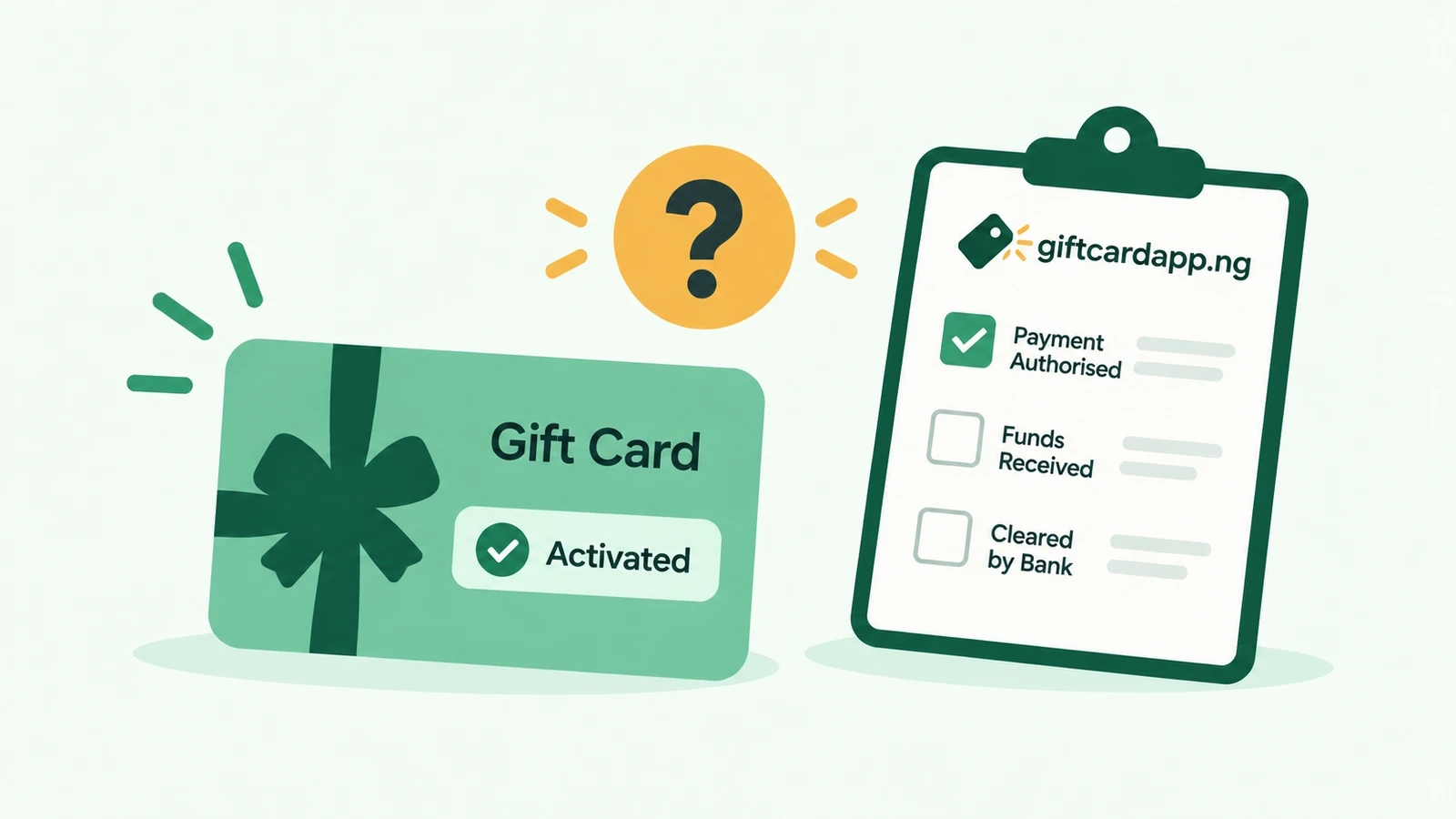
Many card conversations stop at “it works.” That leaves three different questions bundled together. A retailer’s activation record may document a purchase step. An issuer’s balance result describes the value available at the time of the check. The authority to use the original payment method is a separate question.
| Question | Useful evidence | What remains unanswered |
|---|---|---|
| Was a purchase recorded? | A matching retailer receipt or original digital order | Whether the payment account holder authorised it |
| Was this card activated? | The matching activation line and official issuer instructions | Who has permission to give away or sell it |
| What is available now? | A result from the issuer’s official balance-check channel | The funding history and whether another person has the credentials |
| Why does this person have it? | A consistent account of purchase, gift or transfer, supported by records | Facts that only the retailer, issuer or payment provider can investigate |
These are practical review questions, not a legal certification system. A careful buyer cannot independently inspect another person’s bank authorisation records. The aim is to resolve inconsistencies through the right party, rather than treat a screenshot as a complete answer.
A genuine gift does not require matching names everywhere
A family member may buy a card abroad and give it to someone in Nigeria. The purchaser and recipient will naturally have different names. That difference alone is not a reason to accuse anyone or demand their private identity documents.
A useful first question is simple: “Was this bought by you, given to you, or transferred by someone else?” Then check whether the date, store, product, country and denomination fit that explanation. An original gift email or matching order record can supply context without revealing the redeemable code.
For example, a recipient says an aunt purchased a US card as a birthday gift. A purchase record that fits the date and product helps explain that transfer. It does not prove every detail of the funding transaction. Conversely, a receipt for a different card or a changing account of who purchased it calls for clarification.
CardFlow’s Amazon receipt and marketplace guide explains how to connect a purchase record to the correct storefront. For this news analysis, the additional question is who authorised the original payment, not merely which currency appears on the card.
When “just check the balance” is not enough
Suppose an unfamiliar seller offers several recently purchased cards, provides a balance screenshot, and says the buyer should ignore questions about the original order. The screenshot may be accurate or inaccurate. In either case, it does not explain the source of the cards.
Pause when the explanation changes after a straightforward question, the receipt does not match the item, or the person insists that a working balance replaces all purchase checks. An unusually attractive offer can justify closer review, but price alone is not proof of a crime. Neither nationality, cross-border gifting nor the use of a particular messaging app establishes wrongdoing.
| Situation | Useful next step | Limit of that step |
|---|---|---|
| A known relative gives you a card | Keep the original gift or purchase context | A gift message does not guarantee current balance |
| The order and card details disagree | Ask the purchaser or retailer to clarify the mismatch | Do not invent missing details or attach an unrelated receipt |
| An unfamiliar seller avoids source questions | Pause the transaction while keeping the conversation record | Avoidance is a warning sign, not a finding of guilt |
| The purchaser reports an unauthorised payment | Direct that person to their payment issuer; preserve your own records | You cannot resolve their account dispute with a balance check |
Protect payment details while asking about the source
Purchase review should not become a new way to collect credentials. For an initial enquiry, use a redacted copy showing the retailer, date, gift-card product, denomination and relevant order context. Cover the full payment-card number, CVV, account login, one-time password, home address and unrelated purchases.
Keep the gift-card PIN, claim code and redeemable barcode private as well. Do not send a bank statement or passport in an ordinary chat to satisfy someone claiming they must “verify the funding.” If an official provider requests sensitive evidence, independently confirm the channel and share only what that process legitimately requires.
Use the safe-sharing checklist to prepare the working copy. Preserve the unedited original securely for a retailer, issuer or investigator who may need it. Redaction should protect credentials while leaving the useful purchase context readable.
If an unauthorised purchase is discovered
The FTC’s recovery guidance tells a person whose credit card was used without permission to contact their credit-card issuer promptly through a verified channel. It separately advises someone who gave gift-card credentials to a scammer to contact the gift-card issuer and retain the card and receipt.
Those are different problems. If you received the gift card but do not own the payment account, you are not in a position to impersonate the account holder or submit their dispute. Preserve what you actually know: when the card arrived, who transferred it, what purchase records you hold and any subsequent messages.
Contact the relevant retailer, issuer or service through its independently verified support channel. Ask what evidence is needed and keep a case reference. A report does not guarantee a refund, a replacement, resale acceptance or a payout. Do not move the card to another buyer simply to avoid a source question.
The FTC’s gift-card scam guidance also warns against sending card numbers and PINs to people demanding them. Anyone promising to fix a disputed purchase in exchange for another gift-card code deserves particular caution.
What this means for Nigerian gift-card users
The Maryland case does not establish a new Nigerian trading rule or a change in naira prices. It does not identify CardFlow as part of the allegations. Its practical relevance is the distinction between technical usability and a purchase that the payment owner authorised.
Before requesting a quote, record the card’s brand, issuing market, currency, denomination, format and available proof. The preparation checklist covers those basics. Source concerns need an answer of their own; a quoted amount cannot resolve them.
Frequently asked questions
Does an activated gift card prove the original payment was authorised?
No. Activation and payment authorisation answer different questions. A purchase record helps provide context, but it is not a complete check of the original payment account.
Does a gift-card balance screenshot prove ownership?
No. It may describe a result at one moment. It does not establish who purchased the card, who may transfer it or who else can redeem it.
Is a card suspicious just because it came from a relative abroad?
No. Cross-border gifts are legitimate situations. Review the explanation and matching records without treating a different purchaser name or country as evidence of wrongdoing.
Should I request a purchaser’s full credit-card statement?
Not for an initial review. Ask for relevant purchase context with unnecessary payment and personal information redacted. Sensitive records belong only in a verified official process when required.
Can I dispute the original credit-card payment as the gift-card recipient?
Do not act as the payment account holder. The holder should contact their issuer; you can preserve your own records and ask the relevant provider what information you may supply.
Does the Maryland announcement guarantee a refund or change Nigerian rates?
No. It provides neither a recovery promise nor Nigerian pricing data. The outcome of any card dispute depends on the actual facts and the relevant provider’s process.
Sources and editorial note
- DOJ: Maryland gift-card indictment announcement, October 7, 2026
- FTC: What To Do if You Were Scammed
- FTC: Avoiding and Reporting Gift Card Scams
CardFlow checked these official sources on October 9, 2026. The source questions, examples and comparison tables are editorial analysis, not findings about any individual card or a statement of issuer policy. The DOJ announcement contains allegations; the defendant is presumed innocent until proven guilty. This article provides educational information and does not promise legal remedies, card acceptance or payout.
 eBay Australia’s Gift Card Sales Ban: What Changes on 12 NovemberOct 16, 2026
 DOJ: 200+ Gift Cards Allegedly Stolen From Mail — What Buyers Should CheckOct 7, 2026
 California’s New Gift Card Bill: Why the Under-$15 Cash-Out Rule Still AppliesOct 2, 2026