
Quick answer: A September 25, 2026 U.S. Department of Justice release says two former USPS employees were charged in an alleged scheme involving more than 200 gift cards taken from the mail. The release says customer complaints included damaged mail with expected gift cards missing. For Nigerian buyers and sellers, the practical lesson is not that every mailed card is unsafe. It is that physical possession alone does not prove a card followed a clean delivery chain.
If a physical gift card arrives late, opened, damaged or without the expected contents, do not expose its PIN or immediately pass it to another buyer. Preserve the envelope, tracking record, order confirmation, receipt and delivery photos. Contact the sender, retailer or card issuer through an official channel before treating the card as normal stock.
What the DOJ announced on September 25
The U.S. Attorney’s Office for the Southern District of New York announced charges against two former USPS employees. According to the release, investigators began examining customer complaints about damaged mail from which expected gift cards were missing.
The release alleges that one former employee stole gift cards and other items from mail she processed between April 2025 and July 24, 2026, and shared some of the cards with the other defendant. It states that the alleged scheme involved no fewer than 200 gift cards with individual values ranging from $25 to $500.
Those statements describe allegations, not convictions. The DOJ release explicitly says the charges are accusations and that the defendants are presumed innocent unless and until proven guilty. That distinction matters: CardFlow is using the case as a delivery-risk lesson, not as a basis for declaring anyone guilty.
What this case does and does not show
| Point | What the official source says | What buyers should not assume |
|---|---|---|
| Scale | The alleged scheme involved at least 200 gift cards. | It does not show that most mailed gift cards are stolen. |
| Card values | The cited cards ranged from $25 to $500. | Denomination alone does not identify a compromised card. |
| Warning signal | Complaints included damaged mail with expected cards missing. | An intact envelope does not guarantee activation, ownership or unused balance. |
| Legal status | Two former employees were charged. | A charge is not a conviction, and the allegations remain to be proved in court. |
The case is about a particular alleged U.S. mail-theft scheme. It is not evidence that a specific Apple, Steam, Amazon, Google Play, Visa or store card is fraudulent. It also does not establish a Nigerian resale value, a guaranteed refund or a universal replacement right.
Why this matters to Nigerian gift card buyers and sellers
A physical U.S. gift card can reach Nigeria through a relative, an employer, a customer, a forwarding address or another intermediary. Each additional handoff can make the provenance harder to verify. If the card later fails, the important question is not only, “Who handed it to me?” It is also, “Who bought it, how was it delivered, and what evidence connects this exact card to that transaction?”
CardFlow’s guide to physical cards versus eCodes explains why the evidence path changes with the format. A physical card may leave packaging, tracking and a store receipt. An eCode may leave a retailer-domain email and order record. Neither format becomes safe merely because the card or message looks professional.
This is also why a “sealed card” claim should not replace documentation. A seller may genuinely have received an untouched envelope, but appearance cannot establish activation, balance, ownership or whether the card details were exposed earlier. The safest decision is to preserve the delivery chain without circulating the redeemable credentials.
Five checks when a mailed gift card is missing or damaged
1. Stop the card from moving again
Do not sell, forward or “test” a card while its delivery history is unresolved. Do not scratch a covered PIN or send the code to several buyers. Each extra exposure adds another possible explanation if the balance later disappears.
2. Photograph the delivery condition
Capture the complete envelope or package, all sides, labels, tears, resealing, empty inserts and any visible damage. Keep an untouched original set of images. If you prepare a sharing copy, mask home addresses, tracking barcodes and unrelated personal information.
3. Match the card to the order and receipt
Ask for the original retailer or issuer order record where available. Match the brand, denomination, purchase date, delivery destination and any non-secret serial or item reference. A receipt is useful context, but it does not guarantee that the card is genuine, activated, unused or eligible for a particular resale route.
4. Contact the sender, retailer or issuer promptly
If the card is missing, the sender may need to start the delivery inquiry because the sender holds the purchase and shipping records. If the card arrived but the balance is missing or redemption fails, use the issuer’s official support page or phone number—not contact details supplied in an unsolicited message.
5. Preserve the timeline
Record when the card was purchased, dispatched, marked delivered, opened and first checked. Keep original emails and tracking pages where possible. A short, consistent timeline is more useful than a collection of cropped screenshots with no dates.
Use the correct official reporting route
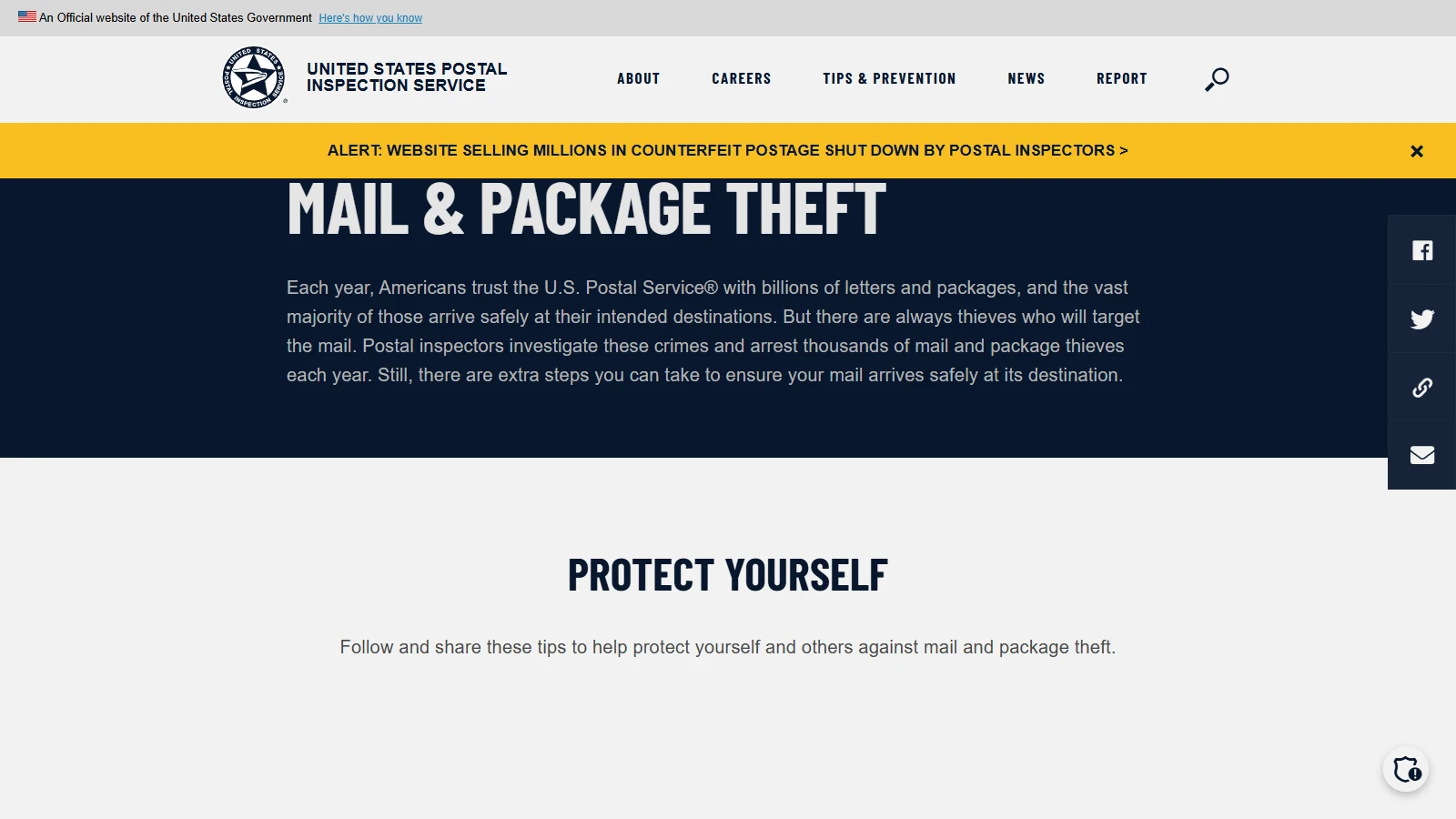
The U.S. Postal Inspection Service mail-theft guidance recommends promptly collecting mail, contacting the sender about overdue valuable mail, considering Hold for Pickup and using signature confirmation for important items. Its reporting route concerns U.S. mail-related incidents.
A person in Nigeria should not claim a U.S. postal incident without a real U.S. delivery connection. If the shipment moved through a U.S. sender or address, coordinate with the person who placed the order or received the shipment. For other carriers or countries, use the relevant carrier, retailer and issuer process.
The U.S. Federal Trade Commission separately advises buyers to inspect gift cards for tampering and keep copies of the card and store receipt. Its gift-card inspection guidance says those records can help when reporting a card that does not work or has no money on it. Mail theft and in-store card tampering are different risks, but both make early evidence preservation important.
What to share—and what to keep private
- Useful first-stage context: brand, country, currency, denomination, physical format, purchase source, delivery date and whether the package was damaged.
- Keep private: full card number, PIN, claim code, scratch area, barcode, QR code, tracking barcode, home address and payment-card details.
- Keep the originals: unedited delivery photos, order email, receipt, tracking history and messages with the sender or carrier.
- Avoid public accusation: report facts and evidence through the appropriate official route instead of naming an individual without proof.
Use the CardFlow safe-sharing checklist to prepare a redacted review copy, and keep the full original files offline for the retailer, issuer, carrier or investigator that legitimately needs them. Before requesting any quote, follow the broader gift-card preparation checklist without treating clear photos as proof of unused balance.
A practical decision table
| Situation | Best immediate action | Do not do this |
|---|---|---|
| Expected card never arrived | Contact the sender and carrier; preserve order and tracking records. | Do not invent a card number or claim it was redeemed. |
| Envelope arrived opened or damaged | Photograph everything before handling further and report the condition promptly. | Do not discard the packaging or scratch the PIN. |
| Card arrived but shows no balance | Contact the issuer or retailer with the card and receipt evidence. | Do not send the full code to strangers for testing. |
| Card came through several intermediaries | Reconstruct the purchase and delivery chain before discussing resale. | Do not treat the latest handoff as proof of original ownership. |
Frequently asked questions
Did the DOJ say all 200 gift cards were used?
The release says the alleged scheme involved theft of no fewer than 200 gift cards and that the defendants allegedly used stolen cards and other items. It does not provide a card-by-card redemption history.
Does damaged mail prove a gift card was stolen?
No. Damage or missing contents is a reason to preserve evidence and report the problem, not proof of who caused it. Carrier, sender, retailer and issuer records may be needed.
Can a Nigerian buyer report a USPS mail-theft case?
Only when there is a genuine U.S. mail connection and accurate information. Often the U.S. sender or recipient is better placed to open the postal inquiry because that person holds the shipping and delivery records.
Should I reveal the PIN to prove the card arrived?
No. Delivery evidence can be documented without exposing a redeemable credential. Keep the PIN, claim code, barcode and full card number private until an official secure process specifically requires them.
Will a receipt guarantee replacement or payout?
No. A receipt can connect the card to a transaction and help an investigation, but replacement depends on the issuer, retailer, delivery facts and applicable terms. It does not guarantee resale acceptance or payout.
Does this news change Nigerian gift card rates?
The DOJ release contains no Nigerian rate data. A mail-theft allegation may reinforce proof checks for physical cards, but it does not establish a naira price movement or a universal discount.
Sources and editorial note
- U.S. Attorney’s Office, Southern District of New York: Two Former USPS Employees Charged, September 25, 2026
- U.S. Postal Inspection Service: Mail & Package Theft prevention and reporting guidance
- Federal Trade Commission: Check out gift cards before you buy them
Editorial note: CardFlow checked the linked official sources on October 7, 2026. The DOJ page is a charging announcement; all allegations remain subject to proof in court. The two images in this package are direct screenshots of the cited DOJ and USPS Inspection Service pages, captured for source identification and converted to WebP without generative editing. They are not CardFlow-created government notices, and no agency endorsement is implied. This article provides general educational information, not legal advice, a delivery guarantee, a replacement promise or a statement that any specific card is stolen.
 eBay Australia’s Gift Card Sales Ban: What Changes on 12 NovemberOct 16, 2026
 Maryland Gift Card Fraud Charges: Why Activation Does Not Prove Payment AuthorisationOct 10, 2026
 California’s New Gift Card Bill: Why the Under-$15 Cash-Out Rule Still AppliesOct 2, 2026