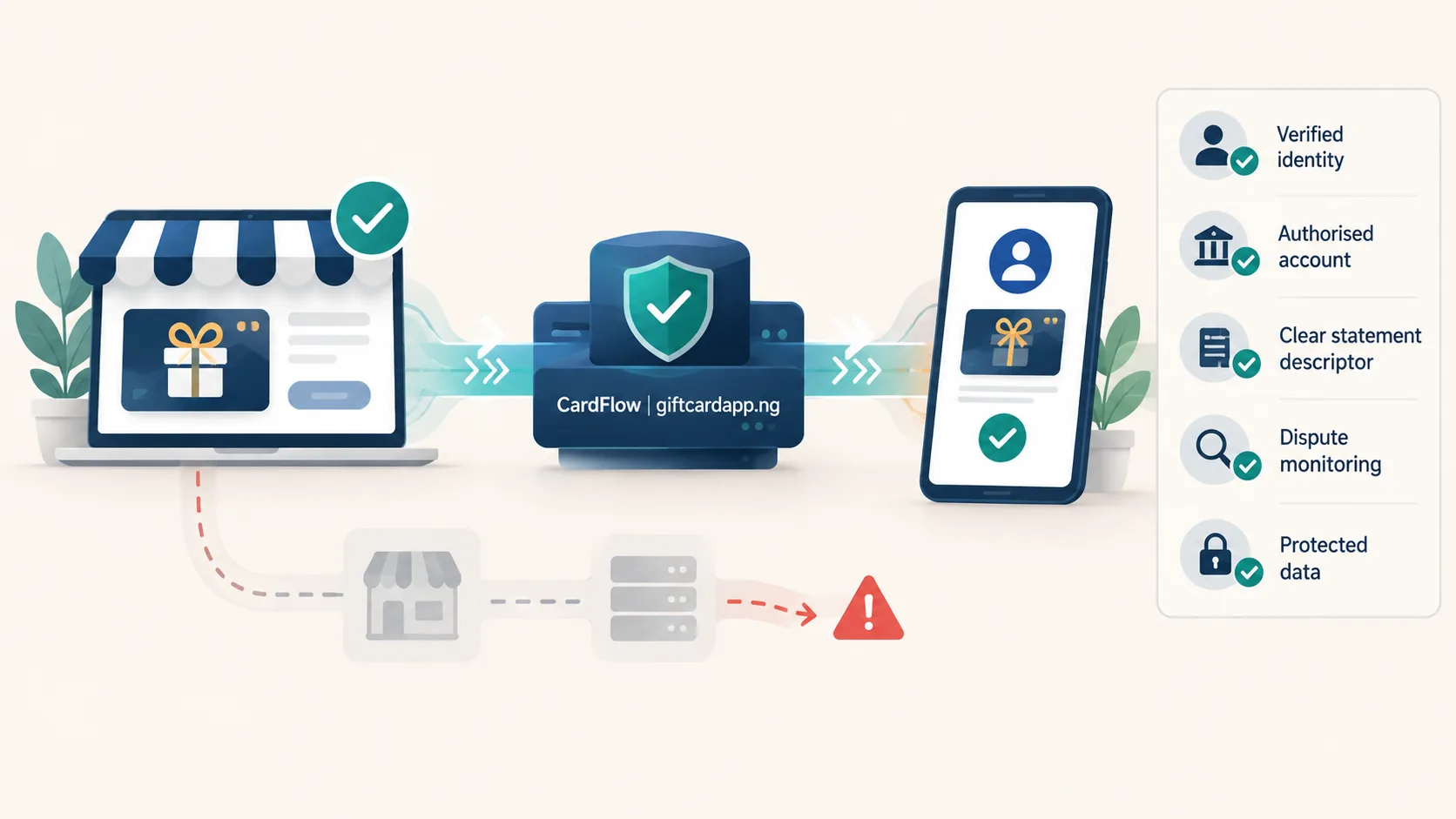
News update, fact-checked September 9, 2026: On September 8, the U.S. Federal Trade Commission (FTC) filed a complaint and a proposed stipulated order involving payment processor 5967 Ventures, LLC, doing business as Humboldt Merchant Services. The FTC says the company agreed to pay $12 million for consumer redress and accept restrictions on processing for merchants with a heightened risk of fraud. The FTC case page lists the matter as pending, and the order has legal force only if a federal judge approves and signs it.
What happened on September 8, 2026
In its September 8 press release, the FTC announced a civil enforcement action against Humboldt Merchant Services. According to the agency, Humboldt will pay $12 million for consumer redress and be permanently barred from processing payments for specified categories of merchants with heightened fraud risk under a proposed settlement.
The FTC’s official case page identifies the case as pending. The agency says it filed the proposed order in the U.S. District Court for the Eastern District of Michigan. The FTC also cautions that a stipulated final order or injunction has the force of law only after the district court judge approves and signs it.
This distinction matters. The FTC complaint (PDF) contains allegations, not criminal convictions. The stipulated order (PDF) records proposed settlement terms, but the FTC page does not say the court had entered the order when CardFlow completed this fact-check.
What the FTC actually alleges
The FTC alleges that Humboldt opened and processed payments for more than 1,000 shell entities used as fronts or pass-throughs for businesses engaged in unauthorised billing scams. The complaint says the processor knew, or consciously avoided knowing, that undisclosed third parties were using those merchant accounts.
The agency also alleges that the accounts showed serious warning signs. Its press release says they typically generated chargeback rates almost ten times higher than the levels card brands viewed as excessive. The FTC further alleges that Humboldt tried to increase approvals by placing these accounts on a lower-risk bank identification number used by an affiliate.
The proposed order would prohibit Humboldt from credit-card laundering, false or misleading merchant-account information and tactics intended to evade fraud and risk monitoring, including load balancing. It would also bar processing for defined groups such as straw companies and certain merchants already associated with excessive chargebacks, laundering, fraud or law-enforcement action.
Why a payment-processor case matters to gift card commerce
Gift card businesses operate around more than the card itself. A marketplace may accept card payments, send bank or wallet payouts, use an acquiring bank, rely on a payment service provider and investigate disputes. Each participant needs an accurate view of the real business, the actual seller or customer and the purpose of the transaction.
When a payment account belongs to a front company, conceals an unrelated seller or routes transactions for a third party, customers can struggle to recognise a statement entry or identify who received their money. A processor may also be unable to evaluate the merchant’s true risk. That is the connection this FTC case illustrates.
For individual Nigerians selling legitimate gift cards to an established platform, this does not mean they must become payments compliance specialists. It does mean they should avoid anonymous payment detours, borrowed business accounts and instructions to misdescribe a transaction. Marketplace operators and high-volume sellers have a larger responsibility to keep ownership, onboarding, billing descriptors, source records and dispute handling consistent.
Payment red flags and practical controls
| Risk signal | What an honest seller or platform should check | What a customer should do |
|---|---|---|
| Business name does not match the payment account | Use the legal or approved trading identity given to the provider; document any legitimate group-company relationship | Pause and ask who will appear on the statement before paying |
| One account processes sales for an undisclosed third party | Process only authorised activity covered by the provider agreement | Do not accept “use this other account” as a harmless shortcut |
| Vague product description or misleading onboarding answer | Describe gift card activity, delivery method and customer flow accurately | Keep the listing, receipt and payment description for comparison |
| Unusual volume of disputes or unauthorised-charge reports | Investigate causes, preserve evidence and follow the provider’s monitoring process | Report an unrecognised charge promptly through the issuer’s official channel |
| Transactions split across accounts to avoid review | Never use load balancing to hide monitoring signals or account limits | Be cautious if instructed to make several payments to unrelated names |
| No clear refund or complaint route | Publish workable support, refund and escalation procedures | Obtain a case reference and keep a dated evidence trail |
Seven checks for Nigerian gift card sellers
- Use the correct identity. Give a bank, wallet or payment provider truthful ownership, address, website and business information. Do not borrow a merchant account or disguise what the business sells.
- Know whose account receives or sends money. If a platform uses a regulated payment partner, its checkout and support information should explain the payment relationship. Do not route a customer to a personal or unrelated account without a legitimate, documented reason.
- Make the transaction recognisable. Use an accurate order reference and billing or transfer description. A customer should be able to connect the amount to the gift card order or payout.
- Keep a source and fulfilment trail. Preserve the order, seller submission, permitted proof, review decision, delivery or payout record and support conversation. Protect full codes, PINs, passwords, one-time codes and unrelated personal data.
- Investigate disputes instead of hiding them. A chargeback is a cardholder dispute and is not by itself proof of fraud. Repeated or unexplained disputes still require analysis, corrections and communication with the payment provider.
- Do not split activity to defeat monitoring. Separating payments among accounts to conceal the true volume, seller or dispute level creates more risk, not less.
- Follow the provider’s actual rules. Merchant categories, permitted countries, card-not-present controls and evidence requirements differ. Use the current contract and official support channel rather than an online workaround.
These checks complement, rather than replace, ordinary gift card source checks. CardFlow’s guide to source checks after a U.S. gift card fraud indictment focuses on ownership and provenance. The present article addresses the separate question of whether the payment account and merchant identity accurately represent the business using them.
What Nigerian buyers should do after an unauthorised card charge
If a debit or credit card statement shows a payment you did not authorise, contact the issuing bank through its verified app, official website or the number on the card. Ask whether the transaction is pending or completed, request the bank’s fraud or dispute procedure and obtain a complaint reference. Do not send a PIN, password or one-time code in an ordinary email or social-media message.
The Central Bank of Nigeria’s complaints guide says a customer should first lodge a complaint with the regulated financial institution and keep evidence of that complaint before escalating an unresolved matter to the CBN. Its Consumer Protection Regulations (PDF) require regulated institutions to maintain complaint-handling processes and emergency channels for time-sensitive issues, especially fraud-related complaints.
The CBN rules apply to institutions within the CBN’s regulatory scope; they do not turn the FTC’s U.S. case into Nigerian law. If the dispute is with a gift card platform rather than your bank, use the platform’s official complaint route as well. If someone demanded gift card codes as payment, the separate CardFlow payment-scam checklist explains how to stop, verify and preserve evidence.
What this case cannot prove
- It does not prove that gift cards were involved; the official complaint and press release do not identify them.
- It does not establish guilt or a criminal conviction. The FTC filed civil allegations, and the case page was marked pending when checked.
- It does not establish that every shell company, high-risk merchant or chargeback is fraudulent.
- It does not create a Nigerian payment rule, licensing requirement or automatic right to a refund.
- It does not show that a particular Nigerian seller, buyer, platform, bank or processor has done anything wrong.
- It does not predict a rise or fall in Nigerian gift card prices, exchange rates, acceptance or payouts.
- It does not justify evading a provider’s country, identity, account or monitoring controls.
Frequently asked questions
Was Humboldt convicted of gift card fraud?
No. The FTC brought a civil case alleging unlawful payment-processing conduct, and its case page listed the matter as pending on September 9, 2026. The official materials do not identify gift cards as involved, and a complaint is not a conviction.
Has the $12 million settlement already become a final court order?
The FTC announced an agreement and filed a stipulated order. The agency states that such an order has the force of law only after a district court judge approves and signs it. CardFlow did not find an FTC notice saying that approval had occurred by the fact-check time.
Does this U.S. case change gift card rules in Nigeria?
No. It does not amend Nigerian law or CBN rules. It provides a current example of why truthful merchant onboarding, clear payment identity and dispute monitoring matter in online commerce.
Is a chargeback proof that a gift card seller committed fraud?
No. A chargeback is a cardholder dispute and can arise for several reasons. A pattern of unusually high or unexplained disputes is a risk signal that a processor or merchant should investigate, not an automatic finding of fraud against one seller.
Can a gift card marketplace use another company’s merchant account?
Only if the arrangement is accurately disclosed, authorised by the relevant provider and consistent with the applicable account and network rules. Secretly processing an unrelated business’s transactions through another merchant identity is a serious warning sign.
Does this news mean Nigerian gift card rates will change?
No. The FTC case provides no evidence for a naira rate forecast. Pricing and acceptance depend on multiple market and platform factors; one overseas enforcement action cannot prove a direction of movement.
Sources and editorial note
- Federal Trade Commission press release — published September 8, 2026.
- Federal Trade Commission case page — status listed as pending when checked.
- FTC complaint for permanent injunction and other relief (PDF) — allegations filed September 8, 2026.
- Stipulated order for permanent injunction and other relief (PDF) — proposed settlement terms filed September 8, 2026.
- Central Bank of Nigeria: complaints management.
- Central Bank of Nigeria: Consumer Protection Regulations (PDF).
Editorial note: CardFlow checked the linked official pages and court filings on September 9, 2026 and paraphrased them rather than reproducing long passages. Allegations are attributed to the FTC, the matter is described as pending, and no criminal conviction is asserted. This article provides general educational information, not legal advice, a recovery promise or an allegation against any Nigerian person or service. The featured image is an original CardFlow editorial illustration, not an official FTC, court, card-network or CBN image.
 CFPB Reviews Scam Warning Signs: Gift Card Payment Checks for NigeriansSep 1, 2026
 FBI IC3 Impersonation Alert: Gift Card Recovery Scam Checks for NigeriansAug 16, 2026
 US Gift Card Fraud Indictment: Source Checks for Nigerian SellersAug 12, 2026