By CardFlow Editorial Team · Fact-checked November 8, 2026
Quick answer
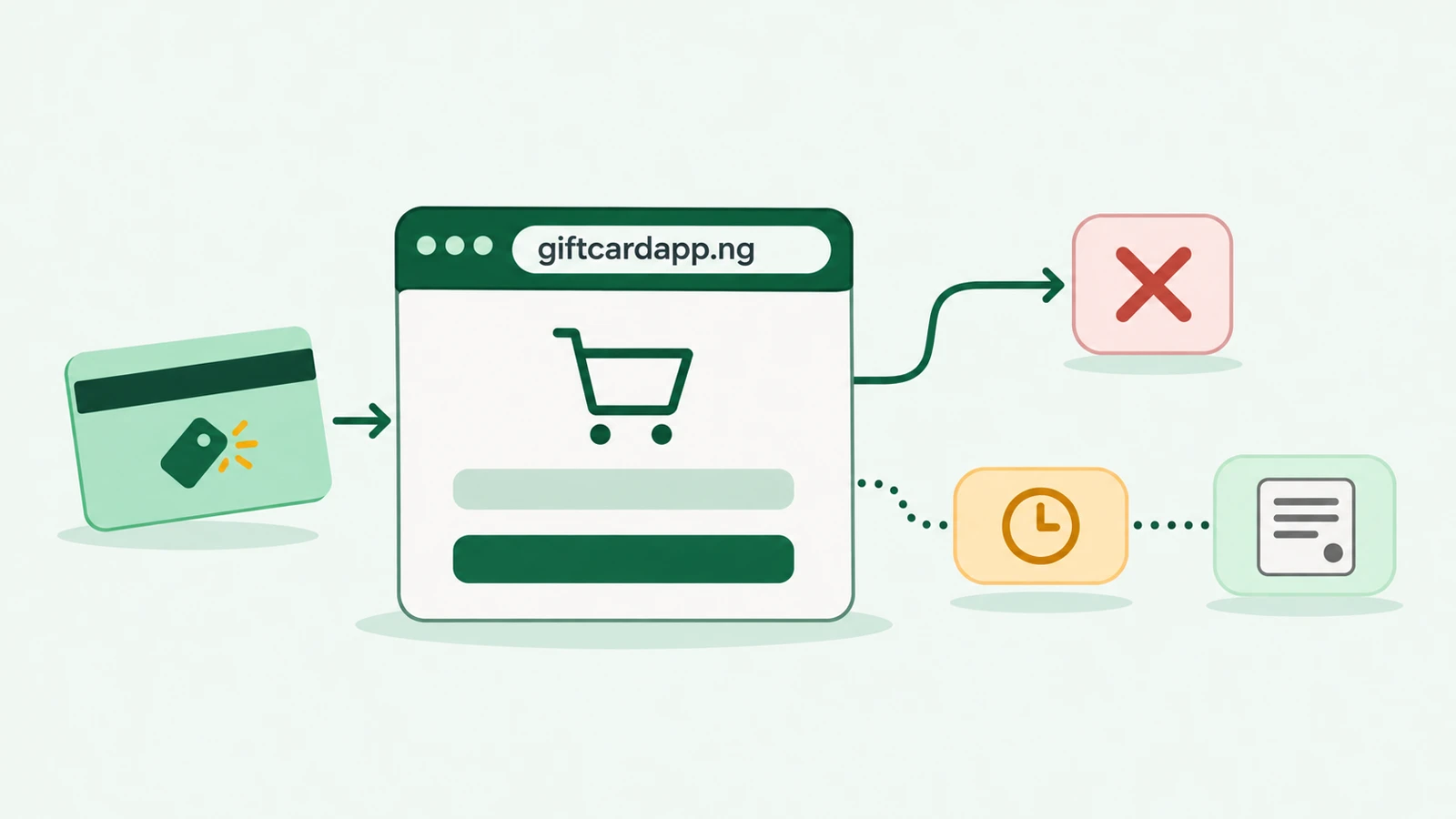
A gift card can show a lower available balance even when the checkout says the purchase was declined. That does not automatically mean the merchant collected the money. The first attempt may have created a pending authorization: a temporary reservation of funds while the merchant and card issuer finish—or unwind—the payment.
Do not keep retrying the same purchase. Check the official card balance and transaction history, note whether the entry says pending or posted, save the merchant name and amount, and compare it with the receipt or decline message. If you recognize the attempt, ask the merchant whether the order exists and contact the issuer for the release timetable that applies to your exact card. If you do not recognize it, contact the issuer immediately using the number or website printed on the card.
Why “declined” and “balance reduced” can both be true
A card payment is not one instant event. A checkout can request permission for an amount, receive or lose that permission, and later send a final transaction for settlement. The customer-facing order screen and the card portal do not always update at the same moment.
This is the gap behind repeated Reddit questions. In one Visa gift-card discussion, the shopper saw a declined restaurant attempt remain pending for days. Follow-up commenters described the same pattern after online and Steam attempts. A later restaurant payment discussion focused on a higher temporary amount that appeared before the final bill. Those reports show the confusion; they do not establish the rules or timing for every card.
The useful question is not simply “Was I charged?” It is: What state is the transaction in, who can see the final order, and what action is safe now?
First identify the transaction state
| What the card history shows | What it usually means | What to verify |
|---|---|---|
| Pending authorization | Funds are temporarily reserved for an attempted purchase | Whether the merchant has an order and whether the issuer is waiting for completion or reversal |
| Posted or completed charge | The transaction has moved beyond a temporary hold | Whether the amount and merchant match a completed purchase |
| Reversal or released hold | A reserved amount is made available again after the attempt is cancelled, declined or finalized differently | Whether the available balance—not only the transaction label—has recovered |
| Refund or merchandise credit | The merchant sends money back after a completed transaction | The refund reference, destination card and expected processing path |
| Unrecognized entry | The merchant or amount does not match anything you attempted | Contact the issuer promptly; do not assume it is a harmless hold |
A pending authorization is not the same as a refund. A refund follows a completed purchase. A reversal releases an authorization that should not become a final charge. The visible balance may look similar during the wait, but the support question is different.
Four common reasons the amount is temporarily unavailable
1. The merchant asked for authorization before the final result
An online checkout can request authorization before inventory, address checks, fraud screening or order creation finishes. If a later step fails, the order may be declined or absent while the authorization is still visible. The merchant or its processor must complete or reverse the attempt, and the issuer controls what the cardholder sees.
2. The final amount was not known yet
Restaurants, fuel pumps, hotels, salons, rental companies and similar merchants may not know the final total when the card is first presented. Visa’s consumer help explains that restaurants and pay-at-the-pump fuel purchases can show an authorization amount before the final total is known. Vanilla’s current gift-card help also says certain transaction types can require a hold above the purchase amount and specifically describes gas stations, hotels, restaurants, salons, rental cars and cruises.
That does not mean every issuer uses the same buffer or release time. It means a card needs enough available value for the authorization request, not merely the receipt amount you expect.
3. The purchase was cancelled after authorization
Cancelling the order does not necessarily remove the card entry instantly. The U.S. Consumer Financial Protection Bureau says a cancelled prepaid-card purchase can take time to process and advises contacting the card provider to learn when the money will be credited back. A cancellation email proves the order status; it does not prove the card balance has already updated.
4. Several retries created several pending entries
Pressing the payment button again can send another authorization attempt. Even if no order succeeds, the card portal may temporarily show more than one pending amount. Stop after the first unclear result. Check the order list and email before retrying, and ask the merchant whether more than one authorization was requested.
What official guidance does—and does not—tell you about timing
Visa’s U.S. consumer help says most account holds in the situations it describes last less than 24 hours and says issuers or financial institutions must remove those holds within 72 hours or less. That is useful evidence for that Visa guidance, but it should not be presented as a universal promise for every gift-card programme, country, merchant workflow or transaction state.
Vanilla says higher preauthorized funds are released when the transaction is finalized. The CFPB’s cancelled-purchase answer does not give one fixed number; it directs consumers to the prepaid-card provider for the exact credit timing. Your cardholder agreement and issuer support remain the controlling sources for your product.
A safe checklist after a declined purchase
- Stop retrying. Do not submit the same purchase again until you know whether an order or authorization exists.
- Check the official card portal. Use the website or phone number printed on the card or original packaging. Record the available balance, transaction status, amount, merchant descriptor and time.
- Check the merchant side. Look for an order number, cancellation notice, receipt or failed-payment message. A cart confirmation is not necessarily an order.
- Compare exact amounts. Note tax, delivery, tip allowance or estimated fuel amount. A different pending amount may be an authorization estimate rather than the final sale.
- Ask the merchant a narrow question. “Do you have a completed order, and did your processor reverse the authorization for this attempt?”
- Ask the issuer about the status. Give the date, descriptor and amount, but never send the full card number, PIN or security code in an email, public post or social message.
- Escalate unrecognized activity immediately. If you did not make the attempt, use the issuer’s official fraud or error channel instead of waiting for a Reddit diagnosis.
If the card has enough money but the checkout still fails, CardFlow’s declined gift-card diagnostic guide helps separate activation, balance, address, merchant and region checks. If the issue is simply that the order costs more than the remaining balance, use the split-payment guide instead.
Who should you contact first?
| What you observe | Best first contact | Useful question |
|---|---|---|
| No order, recognized pending attempt | Merchant, then issuer | Was the authorization reversed, and what release status does the issuer see? |
| Order exists but amount is still pending | Merchant | When will the final amount be submitted and what amount should settle? |
| Cancelled order, balance not restored | Issuer with cancellation evidence | Is this an authorization release or a refund, and what product-specific timing applies? |
| Posted amount is wrong | Merchant and issuer | What final amount was submitted, and which error-resolution process applies? |
| Merchant or amount is unrecognized | Issuer immediately | How do I secure the card and report this entry? |
Evidence that makes support easier
Keep one private timeline rather than sending scattered screenshots:
- the merchant name and exact checkout URL or store location;
- the attempted amount, date, time and currency;
- the order number, or a note that no order was created;
- the exact words “pending,” “posted,” “reversed” or “declined” as shown;
- the available balance before and after the attempt;
- any cancellation email or merchant case number;
- the issuer case number after you call.
Crop screenshots before sharing them with support. Leave the merchant, amount, status and time visible, but cover the full card number, PIN, CVV, barcode, claim code and unrelated purchases. Public Reddit posts should not contain redeemable card details at all.
When a pending entry becomes a different problem
Do not wait indefinitely just because an entry began as pending. Contact the issuer again if it passes the timetable the issuer gave you, changes to posted without a valid order, returns for the wrong amount, or prevents you from using a balance that should be available. Ask for the relevant error or dispute process in the cardholder agreement.
If a merchant completed the order and later issued money back, you are now tracking a refund, not a hold. CardFlow’s missing gift-card refund guide explains how to collect the refund date, reference and destination-card evidence.
If the card portal labels the entire card “on hold” rather than showing one pending merchant entry, treat that as a product or security status. Vanilla’s help, for example, tells cardholders with an “ON HOLD” card status to contact customer service. Do not assume one transaction-level explanation covers an account-level restriction.
What this means for a shopper in Nigeria
A U.S.-issued Visa or Mastercard gift card can still follow its issuer’s country, merchant and address rules when you try to use it from Nigeria. A pending authorization does not prove the card is internationally usable, and a valid balance does not override a domestic-use restriction.
Do not enter a false U.S. billing address, change an account country or use a VPN to force a checkout. Those steps can create a second failure while making the original authorization harder to explain. Use the billing information allowed by the issuer and the official support channel for that exact card.
If your goal is to sell the card rather than spend it, stop while funds are pending. A buyer cannot safely treat the printed face value as the available value, and you should not send the redeemable code to “prove” the balance. Resolve or document the pending entry first, then use a protected verification route.
Frequently asked questions
Why did my gift-card balance drop if the purchase was declined?
The attempt may have created a pending authorization that temporarily reserves funds even though the merchant did not complete an order. Check whether the entry is pending or posted and ask the merchant and issuer about the same date, amount and descriptor.
Is a pending charge the same as a completed charge?
No. A pending entry is generally an authorization that has not reached final settlement. A posted charge has moved beyond that temporary state. Use the exact labels and available balance shown by your issuer.
How long does a gift-card authorization hold last?
There is no safe universal number for every product. Visa publishes specific U.S. account-hold guidance, while other issuers and transaction types may follow different timing. Ask the issuer of your exact card and record the date it gives you.
Why do restaurants or gas stations hold more than my purchase?
The final amount may be unknown when authorization is requested because of tips, fuel volume or other estimated charges. The card may need enough available value for that temporary amount, not only the final receipt you expect.
Should I report an unrecognized pending entry?
Yes. Contact the issuer promptly through the official number or website on the card. Do not assume an unfamiliar merchant or amount will disappear, and do not expose the card details in a public post.
Can I sell a gift card while a transaction is pending?
It is safer to wait until the issuer confirms the available balance and the pending entry is resolved or documented. The face value is not reliable evidence of what can currently be used or verified.
Sources and editorial note
- Visa: account holds, fuel purchases and restaurant authorizations.
- Visa: petroleum merchant authorization-hold best practices.
- CFPB: cancelled prepaid purchase still showing.
- CFPB: prepaid debit-versus-credit settlement timing.
- CFPB: common reasons an online prepaid purchase is declined.
- Vanilla Gift: preauthorizations, merchant categories and card hold status.
CardFlow checked these sources on November 8, 2026. Issuer rules, merchant processing and support interfaces can change. This article is educational and does not promise a release time or a successful purchase. The featured illustration is original AI-assisted CardFlow artwork and contains no real card or account data.
 How to Sell Gift Cards for Cash in Nigeria (2026 Guide)Jun 12, 2026
 Why Gift Card Quotes Change Before Payout in NigeriaJun 23, 2026