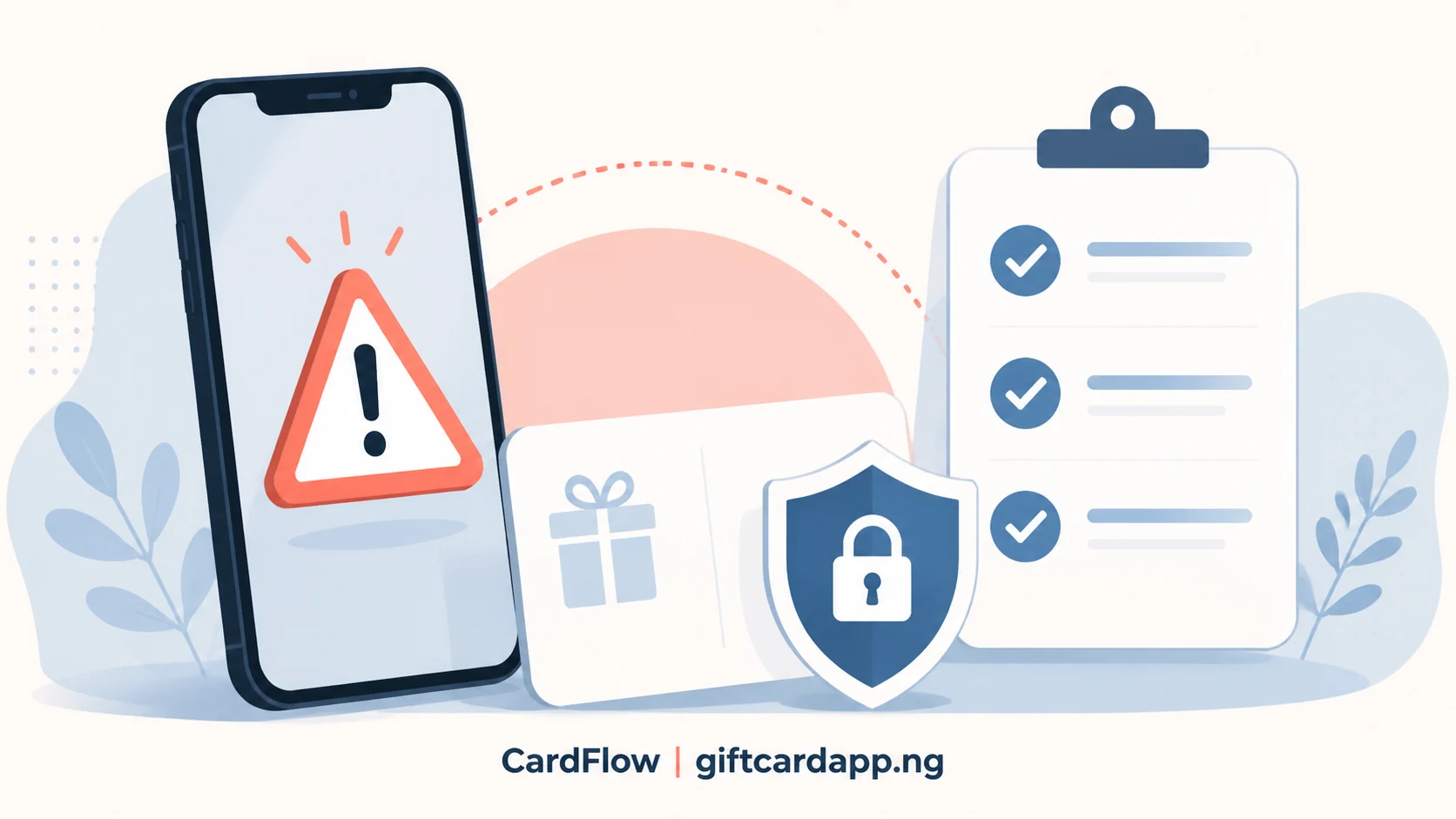
News update, fact-checked September 1, 2026: The U.S. Consumer Financial Protection Bureau (CFPB) marks its official guide to classic fraud and scam warning signs as reviewed on August 28, 2026. The guide identifies demands for unusual payment methods—including gift cards, prepaid cards, wire transfers, cryptocurrency and payment apps—as a warning sign, especially when combined with impersonation or pressure to act immediately.
What happened on August 28, 2026
The CFPB’s official scam-warning guide is labelled “last reviewed: AUG 28, 2026.” Its page metadata also says it was last modified on August 31. The agency does not publish a line-by-line change log on that page, so it would be inaccurate to claim that a specific sentence was newly added on either date.
What can be verified is the guidance now displayed. The CFPB says common warning signs include a person asking for money or personal information, pretending to be a trusted person or organisation, creating urgency, seeking access to financial accounts, or directing payment through an unusual method. Gift cards are named explicitly.
This is consumer guidance, not a criminal charge, court judgment or new regulation. No person or company is accused in the CFPB page, and the page does not announce a Nigerian enforcement action.
What the authoritative sources actually say
The CFPB advises consumers to slow down, ask questions and verify urgent or emotional requests. It recommends calling the organisation through an official number or website instead of trusting contact details, links or QR codes supplied in the message. For a supposed family emergency, it advises contacting the person through a known channel or checking with another trusted person.
The U.S. Federal Trade Commission (FTC) makes the gift-card point even more directly in its gift card scam guidance: a legitimate business or government agency will not tell a consumer to buy a gift card and hand over the number and PIN as payment. The FTC also advises victims to contact the gift card issuer promptly, ask whether money can be recovered, and retain the card and store receipt.
| Warning sign | What to verify independently | Safer next step |
|---|---|---|
| “Pay now with a gift card” | Whether the named organisation accepts that payment method on its own official website | Do not buy or reveal a code; contact the organisation directly |
| Government, bank or business impersonation | The caller’s identity using a number or app you already trust | End the call or chat before starting a fresh contact |
| Threat, deadline or secret instruction | Whether any genuine notice exists in your official account or written correspondence | Pause and ask a trusted person to review the request |
| Link or QR code in an unexpected message | The destination through the organisation’s official site or verified app | Do not click or scan the supplied route |
| Request for account access, OTP, PIN or card code | Whether the real provider ever asks for that information | Refuse, secure the account and report the attempt |
Why gift card payment requests deserve special caution
A gift card is designed to redeem value with its issuer or within a defined store ecosystem. Once someone receives a usable card number and PIN or code, they may be able to redeem or transfer the value without possessing the physical card. A photograph can therefore expose the same sensitive information as typing the code into a message.
This creates a sharp difference between showing limited evidence to a legitimate trading service and handing redeemable credentials to a stranger. If a buyer needs proof of format or purchase, hide the redemption code, PIN, barcode, QR code, account login, one-time password and unnecessary personal details. CardFlow’s guide to sharing gift card details safely explains which areas should remain private during a review.
A payment request can also be suspicious even when the card itself is genuine. A real receipt does not make an impersonator real, and a professional-looking profile does not prove that the person controls the organisation they name. Verify the person, purpose and route separately.
What this means for Nigerian gift card users and sellers
The CFPB is a U.S. consumer-protection agency. Its August review does not create a new legal obligation for Nigerian traders, change Central Bank of Nigeria rules or give the CFPB authority over ordinary Nigeria-to-Nigeria transactions. The guidance is nevertheless relevant because the scam mechanics it describes—impersonation, urgency, account-access requests and payment by transferable value—can reach Nigerians through calls, social media, messaging apps and cross-border transactions.
Nigerian users should connect the international warning signs to local reporting and account-security duties. The Central Bank of Nigeria’s consumer education page says bank customers should keep PINs, passwords and access codes safe and report suspected fraud or compromise promptly to their bank and relevant authorities. The CBN’s official Consumer Protection Framework PDF also addresses protection of financial information and complaint handling.
For a cyber-enabled incident, the Nigeria Police Force National Cybercrime Centre provides an official e-reporting route. For a consumer dispute involving a product or service provider, the Federal Competition and Consumer Protection Commission explains its complaint process, including attaching relevant documents and using a tracking code. The appropriate route depends on what happened; filing a report does not guarantee recovery.
A five-minute verification routine before paying
- Stop the conversation temporarily. Urgency is information, not proof. Do not let the requester keep you on a call while you buy or photograph a card.
- Identify the claimed organisation. Search for its official site yourself. Do not use the phone number, link, QR code or account supplied in the suspicious message.
- Check whether gift cards are an authorised payment method. Government fees, bank account repairs, prize taxes and technical support should not be settled by disclosing a retail gift card code.
- Verify the person through a second channel. Call a family member on a known number, open the bank’s verified app, or contact the business through its official support page.
- Protect redeemable information. Never share the full code, PIN, barcode, QR code, OTP, password or remote-device access. For a legitimate card review, expose only what is necessary.
- Record the evidence before blocking. Save the account name, timestamps, messages, payment instructions and transaction reference without posting private card credentials publicly.
What to preserve if a code or payment was exposed
| Evidence | Why it matters | What not to publish |
|---|---|---|
| Gift card and purchase receipt | May help the issuer identify the card, purchase route and timing | Full redeemable number, PIN, barcode or QR code |
| Chat, email or call record | Shows the account, claims, instructions and sequence of events | Unrelated private conversations or contact details |
| Bank or platform transaction reference | Helps the provider trace a payment or complaint | Login credentials, OTP or full account-security answers |
| Profile URL and username | Preserves the route used even if the display name changes | Unsupported public accusations against an unverified person |
| Issuer or complaint case number | Connects follow-up messages to the original report | Case credentials or identity documents in public posts |
When reporting, describe what you know and distinguish it from what you suspect. Do not edit screenshots in a way that hides their context. Keep original files where possible, and provide copies only through official complaint channels.
What the CFPB review does not prove
- It does not establish a new Nigerian law, CBN rule or gift card trading licence.
- It does not mean every request involving a gift card is fraudulent; buying a card as a gift or redeeming it with its issuer is different from using it to pay a stranger.
- It does not prove that a particular seller, buyer, account or platform committed fraud.
- It does not guarantee that an issuer, bank, platform, police agency or consumer regulator can recover money.
- It does not predict whether Nigerian gift card prices, exchange rates or platform acceptance will rise or fall.
- It does not replace the terms, regional restrictions and verification procedures of the card issuer or trading service.
Recovery-related scams can also begin after a loss, when a second person claims they can retrieve the money for an advance fee. CardFlow’s guide to impersonation and gift card recovery scams covers that separate stage. For broader login protection, see the CardFlow account security checklist.
Frequently asked questions
Did the CFPB ban gift card payments on August 28, 2026?
No. The cited page is consumer guidance marked as reviewed on that date. It identifies unusual payment demands as a scam warning sign; it does not announce a ban on buying or redeeming gift cards.
Does the CFPB guidance legally apply to Nigeria?
The CFPB is a U.S. agency, and the page does not create a Nigerian rule. Nigerian users can still use its practical warning signs while relying on Nigerian banks, regulators and law-enforcement channels for local complaints.
Is every request to share a gift card image a scam?
No, but a full image may expose redeemable information. A legitimate verification process should explain what evidence is required and allow sensitive codes, PINs, barcodes and personal data to remain hidden until an authorised redemption step.
What should I do if I already sent the code?
Contact the gift card issuer immediately through its official website or the number printed on the card or receipt. Keep the card and receipt, secure any linked accounts, notify your bank if a bank payment was involved, and report the incident through an appropriate official channel.
Can a receipt guarantee that I will get the money back?
No. A receipt can support ownership and timing, but it does not guarantee a freeze, refund or recovery. Outcomes depend on the issuer, whether the value remains available and the facts of the case.
Does this news affect Nigerian gift card rates?
The guidance provides no evidence for a rate forecast. Gift card prices and platform decisions depend on multiple factors, and an overseas consumer-warning page cannot by itself prove that rates will rise or fall.
Sources and editorial note
- Consumer Financial Protection Bureau: classic warning signs of fraud and scams — marked reviewed August 28, 2026.
- Federal Trade Commission: avoiding and reporting gift card scams.
- Central Bank of Nigeria: consumer education and bank customer duties.
- Central Bank of Nigeria: Consumer Protection Framework (PDF).
- Nigeria Police Force National Cybercrime Centre e-reporting portal.
- Federal Competition and Consumer Protection Commission: complaint handling procedure.
Editorial note: CardFlow checked the linked official pages on September 1, 2026 and paraphrased them rather than reproducing long passages. The CFPB page does not provide a line-by-line revision history, so this article describes the guidance visible after its August 28 review without attributing a specific wording change to that date. This article is educational information, not legal advice, a recovery promise or an allegation against any person or service. The featured image is an original CardFlow editorial illustration, not an official CFPB, FTC, CBN, police or FCCPC image.
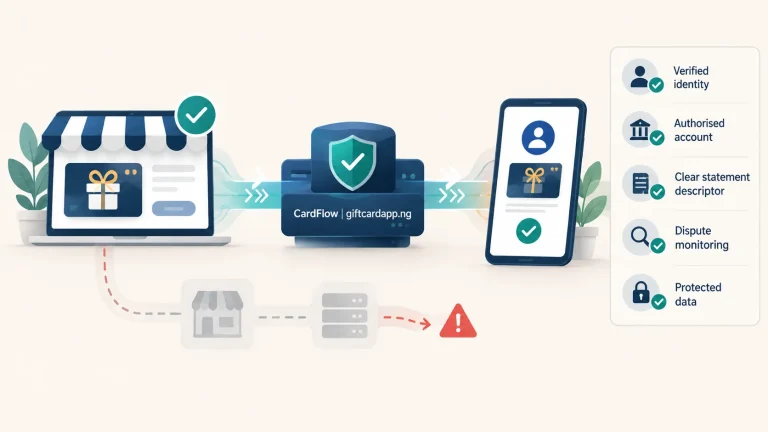 FTC Payment-Processor Case: Checks for Nigerian Gift Card SellersSep 9, 2026
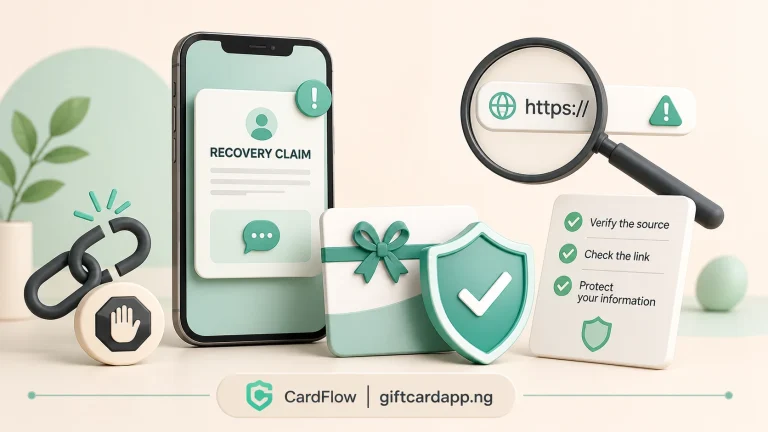 FBI IC3 Impersonation Alert: Gift Card Recovery Scam Checks for NigeriansAug 16, 2026
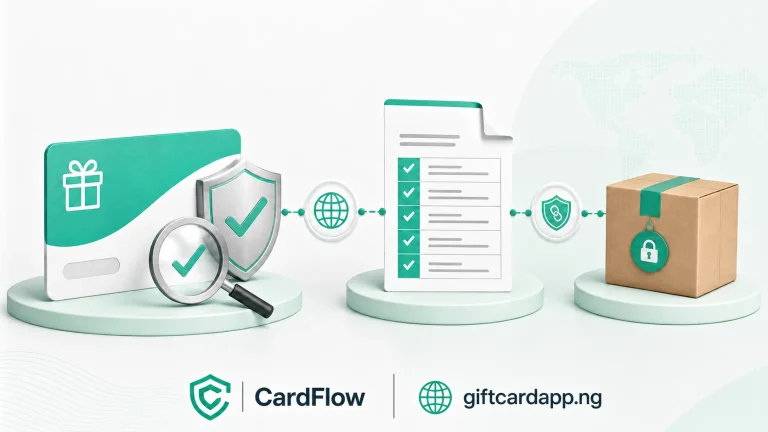 US Gift Card Fraud Indictment: Source Checks for Nigerian SellersAug 12, 2026