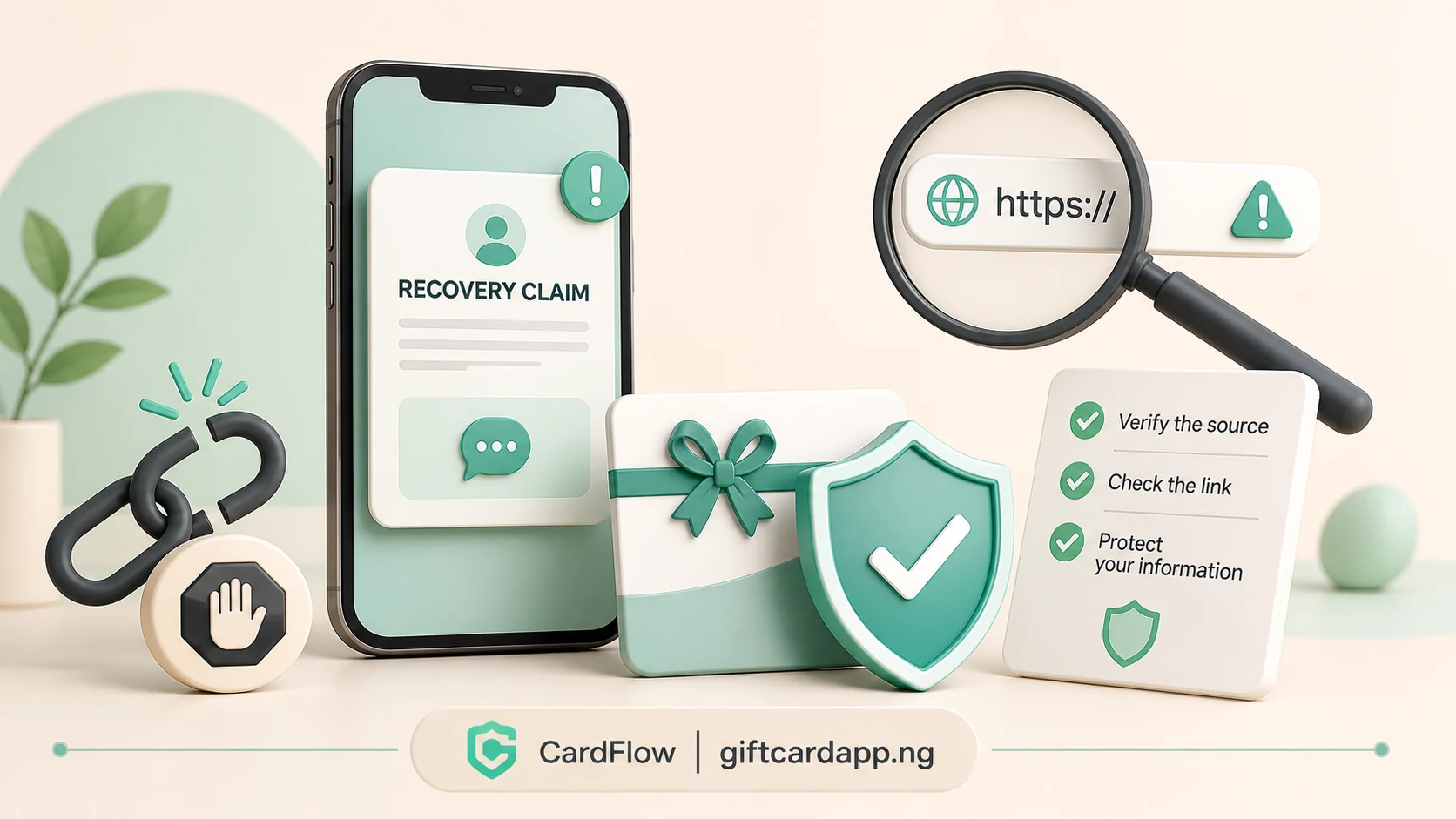
News update, fact-checked August 16, 2026: The FBI’s Internet Crime Complaint Center updated its warning on July 20 about scammers impersonating IC3 or FBI personnel to target people who have already lost money. The alert directly mentions gift cards among the assets people should not send to unknown online or telephone contacts. It is a U.S. public-service alert, not a new Nigerian law or evidence of a Nigeria-specific campaign.
What the FBI and IC3 warned about on July 20
The IC3 public service announcement dated July 20, 2026 updates an earlier warning about an ongoing impersonation scheme. According to the alert, scammers pose as FBI personnel connected with IC3 complaints and try to deceive people who have already experienced fraud.
The alert says complainants described contact by email, phone, social media, forums and advertisements. It says almost all complainants reported that the person claimed to have recovered their lost funds or offered to help recover them. The FBI describes that promise as a ruse to victimize the person again.
Two examples in the alert involve fake social-media profiles and spoofed complaint websites. In one, an impersonator approached a person after the person said they would file an IC3 report, then sent a supposed “update” link through messaging services. In another, AI-generated videos presented fake FBI figures promoting a look-alike IC3 website that collected personal and loss information.
The agency states that IC3 does not recover funds through Facebook, Telegram or similar platforms, does not maintain social-media accounts, and will not ask for payment to recover lost funds. It also tells readers not to send money, gift cards, cryptocurrency or other assets to people they do not know or have met only online or by phone.
How a gift card recovery scam can unfold
A recovery scam often exploits real information from an earlier incident. Knowing the issuer, denomination, date or amount lost does not prove that the new contact is an investigator or recovery specialist.
| Stage | What the contact may claim | Safer response |
|---|---|---|
| First approach | “We found your complaint” or “Your gift card funds have been recovered.” | Do not confirm extra details. Record the account, number, message and time of contact. |
| Authority signal | A badge image, reference number, official-looking profile or AI-generated video proves the contact is real. | Do not treat visual branding as authentication. Find the agency’s official site independently. |
| Link or form | You must update a report through a supplied link or single-page form. | Do not use the link. Type the verified government domain into the browser yourself. |
| Recovery fee | A tax, processing charge, legal fee or “verification card” is required before release. | Stop. IC3 says it will not charge to recover funds or refer someone to a fee-charging recovery company. |
| Payment or code request | Send a gift card, cryptocurrency, transfer or card code to complete recovery. | Do not pay or reveal the code. Contact the issuer, platform, bank and relevant authority through official channels. |
Why the alert matters to gift card users and sellers
Gift cards create a natural link to this warning for two reasons. First, someone who lost card value may urgently want a refund and become vulnerable to a second approach. Second, a scammer can ask for another gift card or a redeemable code as the supposed price of recovery. Once a code is exposed, value may be taken without the physical card.
A recovery contact may also ask a seller to “test” a replacement card, receive a card on behalf of a victim, convert a refund into cash, or move the conversation to a private channel. Those requests can obscure who owns the value and who is authorised to transact. A seller should not become an intermediary in a recovery story that cannot be independently verified.
The lesson complements CardFlow’s earlier report on source checks after a U.S. gift card fraud indictment: a working balance or convincing story does not establish lawful ownership. The safe gift card sharing checklist explains which redeemable details should stay hidden, while the CardFlow account security guide covers password and account-protection basics.
What this means for readers in Nigeria
The FBI alert describes impersonation of a U.S. reporting service. It does not say that Nigeria, a Nigerian gift card platform or CardFlow was involved. It also does not establish that the campaign is specifically targeting Nigerians.
The practical risk can still cross borders. A fake profile, messaging account, sponsored result or spoofed website can be shown to a person anywhere. Nigerians who have discussed a loss in public comments, messaging groups or social media may expose details that make a later recovery pitch sound credible.
A Nigerian victim should use the reporting channel that fits the incident. Suspected cyber-enabled fraud can be reported through the Nigeria Police Force National Cybercrime Centre e-reporting portal. A consumer dispute involving a local product or service provider may also fit the FCCPC complaint process. The FCCPC says relevant documents such as receipts and correspondence can be attached to a complaint.
If an incident has a genuine U.S. connection or the person previously filed an IC3 complaint, navigate to www.ic3.gov by typing the address directly. Do not assume that filing any report guarantees an investigation, refund or recovery.
Six checks before trusting a recovery claim
- Pause the conversation. Urgency is not proof. Do not pay, send a card, reveal a code or install an app while someone is pressuring you.
- Verify the domain yourself. Open a new browser tab and type the official address. Avoid a link, QR code, sponsored search result or phone number supplied by the contact.
- Check the communication method. The IC3 alert says it has no social-media presence and does not recover funds through Facebook, Telegram or similar platforms.
- Reject upfront fees and guarantees. A claim that recovery requires a gift card, processing payment, tax, deposit or cryptocurrency transfer is a decisive warning sign.
- Separate evidence from secrets. Preserve the receipt, card packaging, order email and messages, but do not publish or send the full card number, PIN, barcode, QR code, login, OTP or identity document.
- Contact the issuer or platform independently. Use the official support page or number found on the issuer’s website. Ask for a case reference and keep the response.
If you already sent a gift card or exposed its code
- Contact the issuer immediately. Use its official support channel, say the card was used in a scam and ask whether the transaction or remaining value can be stopped. The FTC advises keeping the gift card and receipt.
- Tell the platform or bank involved. Report the account and transaction, request a case number and ask what protective or reversal steps are available. Do not accept a recovery guarantee.
- Secure affected accounts. Change reused passwords, enable multi-factor authentication, end unknown sessions and contact your mobile provider if your number may have been taken over.
- Preserve the full trail privately. Keep usernames, profile links, phone numbers, domains, timestamps, messages, payment instructions and transaction references.
- Report through the correct official portal. Use NPF-NCCC or another relevant Nigerian authority for a Nigerian cybercrime report. Use IC3 only where appropriate to the U.S.-connected incident, and type the domain yourself.
- Expect possible follow-up scams. Treat any new person who claims to know the loss and asks for money, codes or personal information as unverified.
Evidence to keep without exposing redeemable details
| Evidence | Why it helps | Privacy rule |
|---|---|---|
| Original receipt or order email | Connects the issuer, retailer, date, denomination and purchase route. | Share only through an official case channel; redact unrelated payment and identity data. |
| Physical card and packaging | May help the issuer trace the product and remaining value. | Never post the full number, PIN, barcode or QR code publicly. |
| Messages and profile links | Show the recovery promise, contact method, instructions and account identity used. | Preserve the original privately; use redacted copies for general advice. |
| Website address and screenshots | Help document a spoofed domain, fake form or misleading advertisement. | Do not revisit a suspicious link to collect more evidence; record what you already have. |
| Transaction references | Help the issuer, bank, platform or authority locate the event. | Do not publish bank details, OTPs, passwords or identity documents. |
What the IC3 alert does not prove
- It does not prove that every person offering assistance after fraud is a criminal. Verify the identity and process through independent official channels.
- It does not identify Nigeria, CardFlow or a Nigerian gift card service as part of the reported scheme.
- It does not create a new Nigerian reporting rule, refund right or guarantee of reimbursement.
- It does not mean that a badge image, reference number, video call or knowledge of the previous loss proves official status.
- It does not show that every U.S.-based website, recovery firm, lawyer, bank contact or law-enforcement message is fake.
- It does not set gift card prices or imply that Nigerian gift card rates will rise or fall.
IC3 impersonation and gift card recovery FAQs
Will IC3 ask me to buy a gift card to recover money?
No. The July 20 alert says IC3 will not ask for payment to recover lost funds or refer someone to a company that charges for recovery. It also warns against sending gift cards or other assets to people known only online or by phone.
Can an IC3 agent contact me on Facebook, Telegram or WhatsApp?
The alert says IC3 has no social-media presence and does not investigate crimes or recover funds through Facebook, Telegram or similar platforms. Treat such an account as fraudulent and use the official IC3 domain independently.
Does a case or reference number prove a recovery message is real?
No. The FBI says spoofed forms can issue reference numbers. Verify the domain and contact route independently, and do not provide money or extra information merely because a number looks official.
What should a Nigerian gift card user do first after losing a code?
Contact the issuer immediately through its official support channel, keep the card and receipt, notify any platform or bank involved, secure affected accounts and preserve the communication trail privately.
Should I file with IC3 or a Nigerian authority?
Use the channel that matches the incident. NPF-NCCC is an official Nigerian cybercrime reporting route. IC3 may be relevant to a U.S.-connected internet crime or an existing IC3 complaint, but filing does not guarantee recovery.
Will this alert change gift card rates in Nigeria?
No. The FBI alert is about impersonation and recovery scams. It does not set market prices or provide evidence that Nigerian gift card rates will increase or decrease.
Sources and editorial note
The news summary is based on the FBI/IC3 alert. Recovery and evidence guidance is supported by FTC consumer advice and official Nigerian reporting and complaint channels.
- FBI/IC3: FBI Warns of Scammers Impersonating the IC3Public Service Announcement I-072026-PSA, dated July 20, 2026.
- Internet Crime Complaint Center official websiteOfficial domain referenced by the alert for appropriate U.S.-connected complaints.
- FTC: Refund and Recovery ScamsConsumer guidance on upfront fees, impersonation and high-risk payment requests.
- FTC: What To Do if You Were ScammedOfficial response steps for gift cards, account access and other payment methods.
- Nigeria Police Force National Cybercrime Centre e-reporting portalOfficial Nigerian route for reporting suspected cyber-enabled fraud.
- FCCPC complaint handling procedureOfficial consumer complaint process for relevant product or service disputes.
Editorial note: Fact-checked by the CardFlow Editorial Team on August 16, 2026. The official IC3 page’s source image is a generic FBI public-service banner rather than an event photograph, so CardFlow prepared an original editorial illustration for this article. This article does not promise recovery, provide legal advice or predict gift card prices. Check the original sources for later updates.
 FTC Payment-Processor Case: Checks for Nigerian Gift Card SellersSep 9, 2026
 CFPB Reviews Scam Warning Signs: Gift Card Payment Checks for NigeriansSep 1, 2026
 US Gift Card Fraud Indictment: Source Checks for Nigerian SellersAug 12, 2026