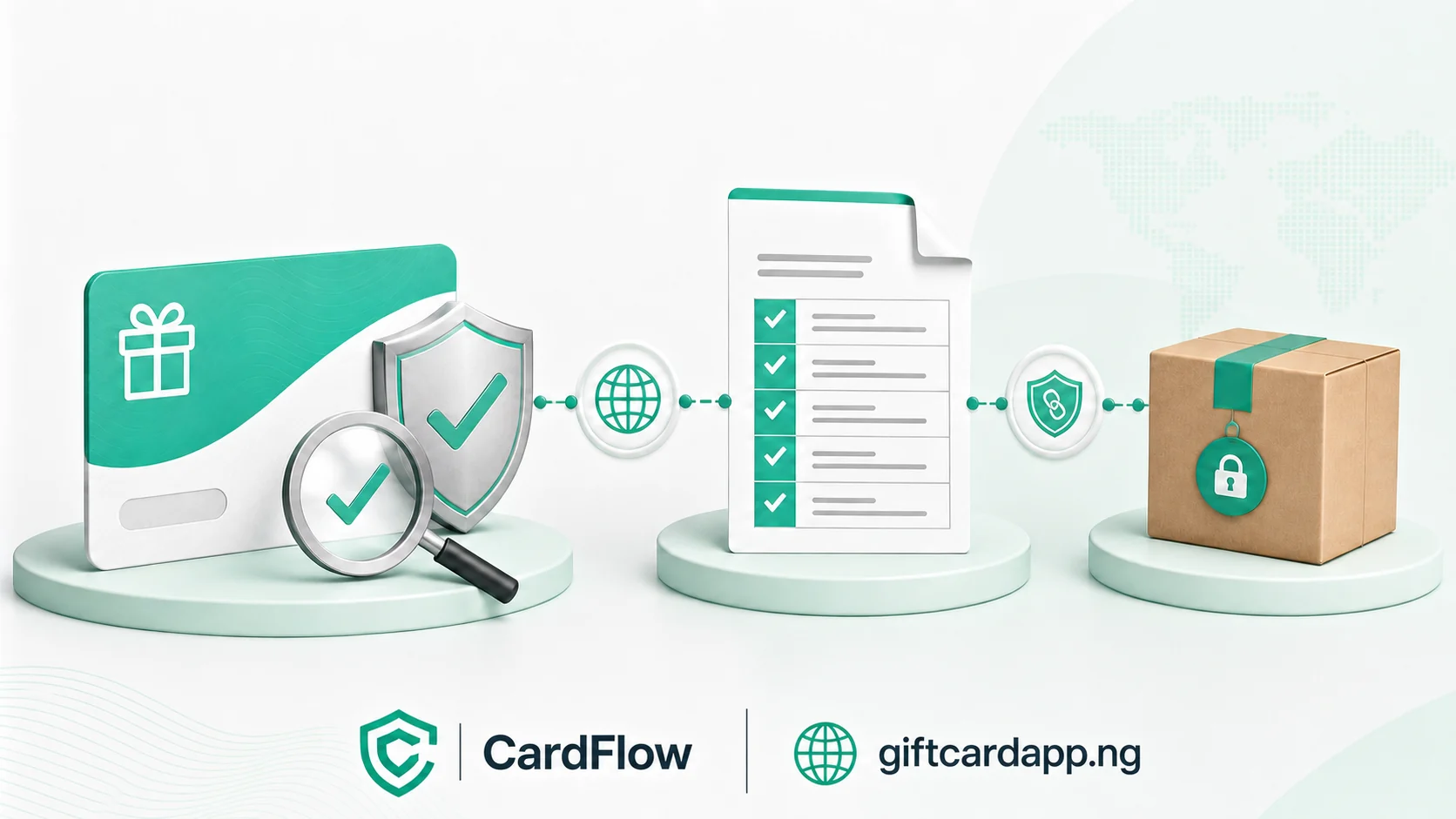
News update, fact-checked August 12, 2026: The U.S. Department of Justice announced on July 22 that a federal grand jury in New Hampshire had returned an indictment in an alleged international gift card fraud conspiracy. The allegation matters to secondary-market participants because it describes how stolen card value can move through goods, shipping and other payment channels. It does not accuse Nigeria, change Nigerian law or predict a Gift Card rate.
What the DOJ announced and when
The Justice Department’s Office of Public Affairs published its announcement on July 22, 2026. It said a federal grand jury in the District of New Hampshire had returned an indictment the previous day charging Jinbin Ren with conspiracy to commit wire fraud. A separate release from the U.S. Attorney’s Office for the District of New Hampshire was published on July 23 and later updated on August 3.
According to those releases, the indictment alleges that Ren and co-conspirators acquired gift cards stolen from victims through romance fraud, elder fraud, hacking, theft and other scams. The releases allege that the cards were used to buy Apple products and other high-value electronics, which were shipped to a New Hampshire warehouse, consolidated and sent to China and Hong Kong. They also allege that WeChat and cryptocurrency were used to coordinate purchases, shipments and payments.
The DOJ says conspiracy to commit wire fraud can carry a maximum prison term of 20 years. That is a statutory maximum, not a sentence in this case. The releases state that the details in the charging documents are allegations and that the defendant is presumed innocent unless and until proven guilty beyond a reasonable doubt.
The alleged route, and the verification lesson
The table below keeps the legal status clear: every case-specific entry is an allegation reported by the DOJ, not a proven fact about the defendant.
| Stage | What the DOJ alleges | Practical verification lesson |
|---|---|---|
| Card acquisition | Gift cards were obtained from victims through romance fraud, elder fraud, hacking, theft and other scams. | A working balance does not establish lawful ownership. Ask for a coherent source and matching purchase evidence. |
| Conversion to goods | The cards were used to buy high-value electronics. | Redeeming a card into merchandise can move value quickly. Do not help an unknown party redeem, buy or ship goods to bypass normal checks. |
| Consolidation | Electronics were sent to a warehouse in New Hampshire. | Multiple unrelated cards, buyers or shipping names converging on one destination can justify enhanced review. |
| Cross-border movement | The electronics were consolidated and shipped to China and Hong Kong. | Cross-border activity is not automatically criminal, but mismatched identities, routes and unexplained intermediaries should be resolved before value is released. |
| Coordination and payment | Messaging and cryptocurrency were allegedly used to coordinate parts of the scheme. | No app or payment method proves wrongdoing by itself. Review the complete transaction trail instead of treating one technology as proof. |
Why this matters to Nigerian Gift Card users and sellers
The cited case is American. The DOJ releases do not identify Nigeria, a Nigerian consumer, a Nigerian trading platform or CardFlow as part of the alleged conduct. There is therefore no basis to present the indictment as a new Nigerian rule or a direct warning about every card entering Nigeria.
The natural connection is narrower: Gift Cards are portable value. A card can appear technically valid while its source is disputed or fraudulent. Nigerian participants in a secondary market can reduce that risk by checking the relationship between the person presenting the card, the original purchaser, the receipt or digital order, the card’s country and currency, and the requested payout route.
These checks should be applied consistently. Nationality, an overseas purchase, use of cryptocurrency, a messaging app or a request to resell a card does not by itself prove crime. Risk decisions should be based on documented inconsistencies and platform or issuer verification, not stereotypes.
Source checks before you submit or buy a card
- Identify the card route. Record the issuer, country, currency, denomination and whether it is physical or digital. Do not expose the redeemable code while asking a general support question.
- Match the evidence. A receipt or order confirmation should fit the retailer, date, denomination, card format and purchaser story. A cropped image with missing context deserves more review.
- Understand the purchaser relationship. If the presenter did not buy the card, ask how they obtained it. A genuine gift can have a reasonable explanation; an unknown third party, paid intermediary or changing story is different.
- Keep communication inside the official channel. Do not move to an unofficial account because someone promises a faster quote, asks to “test” the code or requests a private shipment.
- Separate balance from ownership. A balance check can show value is present, but it cannot prove the card was lawfully acquired or will remain valid after review.
- Pause before payout or redemption. Resolve identity, receipt, region or route mismatches before the card is redeemed or funds are released. Never structure a transaction to bypass a platform control.
CardFlow’s receipt and marketplace source guide gives a brand-specific example of matching purchase evidence. For code privacy, use the safe sharing checklist. When comparing a buyer, review the full process rather than a headline quote with the Gift Card buyer checklist.
Risk signals and the next safe action
| Risk signal | What it may mean | Safe next action |
|---|---|---|
| The presenter says the card belongs to a “client” but cannot explain the relationship. | The source and authority to sell are unclear. | Pause. Ask for lawful-source evidence through the platform’s protected review process. |
| The receipt, card region, denomination or purchase date does not match the story. | The evidence may be incomplete, reused or unrelated. | Do not redeem or pay out until the mismatch is resolved. |
| Someone asks for the full code or PIN to “check” the card in chat. | They may be trying to take the value before formal review. | Keep the code hidden and use only the platform’s official submission flow. |
| An unexpected boss, official, relative or romantic contact tells you to buy cards and send the numbers. | This matches common impersonation and relationship-scam patterns. | Stop. Verify the person through a known contact method and do not send the code. |
| A buyer asks you to purchase electronics or ship goods for an unknown party. | The request could insert you into a value-conversion or reshipping chain. | Decline and preserve the messages. Report the account if the request appears fraudulent. |
| A “recovery agent” asks for another gift card, crypto payment or fee. | This may be a follow-up recovery scam. | Do not pay. Contact the issuer, platform and authorities through independently verified channels. |
If you think a card is tied to fraud
- Stop the transaction. Do not redeem, resell, forward or publish the code while the concern is unresolved.
- Preserve evidence privately. Save the physical card, receipt, order email, usernames, phone numbers, timestamps, transaction IDs and relevant messages. Redact redeemable codes before sharing screenshots outside an official case channel.
- Contact the issuer immediately. Use the support page or phone number on the issuer’s official website. The FTC advises people who sent a code to a scammer to contact the gift card company promptly and keep the card and receipt.
- Notify the platform. Report the account and transaction through the platform’s official fraud or support process. Ask for a case reference and keep the response.
- Use the appropriate Nigerian channel. Suspected cyber-enabled fraud can be reported through the Nigeria Police Force National Cybercrime Centre e-reporting portal. A consumer dispute with a local product or service provider may also fit the FCCPC complaint process. Choose the channel that matches the problem and provide accurate records.
What this case does not prove
- An indictment is not a conviction, and the defendant retains the presumption of innocence.
- The cited DOJ releases do not say that Nigeria or a Nigerian Gift Card platform was involved.
- The case does not prove that all cards bought overseas, resold through messaging apps or connected to cryptocurrency are stolen.
- A receipt can support a source check, but it does not guarantee lawful ownership or successful issuer verification.
- The announcement does not change Nigerian payment regulation, set a Gift Card price or show that Nigerian rates will rise or fall.
- The case does not authorise users to investigate suspects, confront an alleged fraudster or publish private data. Preserve evidence and use official reporting channels.
Gift card fraud indictment FAQs
Was anyone convicted in the July 2026 gift card case?
No. The cited DOJ releases describe an indictment and allegations. The defendant is presumed innocent unless and until proven guilty beyond a reasonable doubt.
Does the DOJ case involve Nigeria?
The cited releases do not identify Nigeria, a Nigerian consumer, a Nigerian platform or CardFlow as part of the alleged scheme.
Should Nigerian sellers reject every gift card bought overseas?
No. Country of purchase alone does not prove fraud. Check the issuer, region, format, receipt or order record, purchaser relationship and transaction history without exposing the redeemable code.
Does a receipt guarantee that a gift card is legitimate?
No. A receipt is useful evidence, but it must match the card, retailer, date, denomination and purchaser story. Issuer and platform verification may still be required.
What should I do if I already sent a gift card code to a scammer?
Contact the issuer immediately through its official support channel, keep the card and receipt, preserve messages and transaction records, notify the platform involved, and report suspected cybercrime through the appropriate local authority.
Will this indictment change Nigerian gift card rates?
The DOJ releases do not set prices or predict market movement. The case is not evidence that Nigerian Gift Card rates will rise or fall.
Sources and editorial note
The case summary is based on the two DOJ releases below. Safety and reporting steps are separated from the case allegations and come from official consumer-protection and Nigerian reporting resources.
- U.S. Department of Justice: Gift Card Fraud Conspiracy IndictmentOffice of Public Affairs release dated July 22, 2026 and updated July 23, 2026.
- U.S. Attorney’s Office, District of New Hampshire: Case AnnouncementRelease dated July 23, 2026 and updated August 3, 2026; includes the presumption-of-innocence statement.
- FTC: No, that’s not your boss asking you to buy gift cardsJanuary 28, 2026 consumer alert on impersonation, PIN privacy, receipts and issuer reporting.
- FTC PDF: Gift Card Best Practices for Scams Against Older AdultsOfficial seven-page document describing common monetisation routes and industry controls.
- Nigeria Police Force National Cybercrime Centre e-reporting portalOfficial Nigerian channel for reporting cyber-enabled fraud and preserving evidence.
- FCCPC complaint handling procedureOfficial consumer complaint process for relevant disputes with product or service providers.
Editorial note: Fact-checked by the CardFlow Editorial Team on August 12, 2026. This article distinguishes DOJ allegations from established facts and does not provide a prediction about Gift Card prices, rates or the outcome of the criminal case. Check the original sources for later court or agency updates.
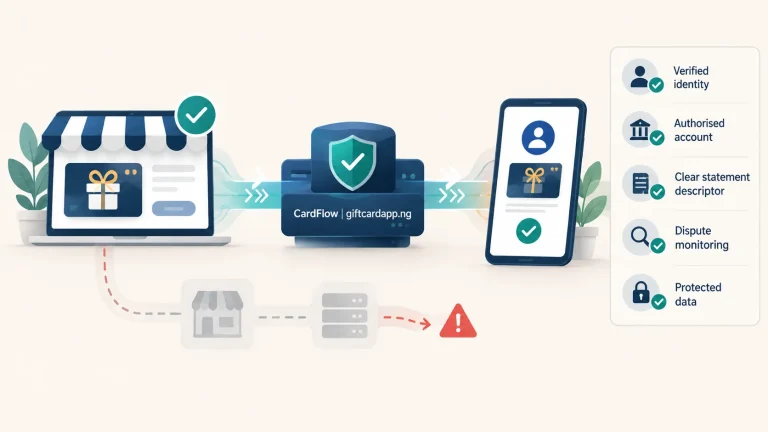 FTC Payment-Processor Case: Checks for Nigerian Gift Card SellersSep 9, 2026
 CFPB Reviews Scam Warning Signs: Gift Card Payment Checks for NigeriansSep 1, 2026
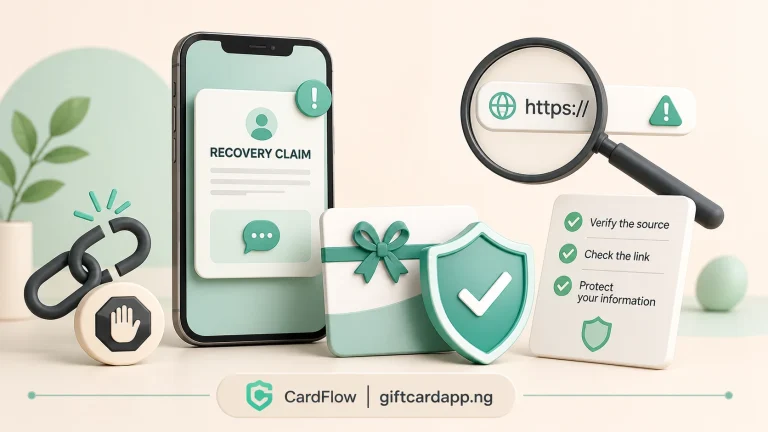 FBI IC3 Impersonation Alert: Gift Card Recovery Scam Checks for NigeriansAug 16, 2026