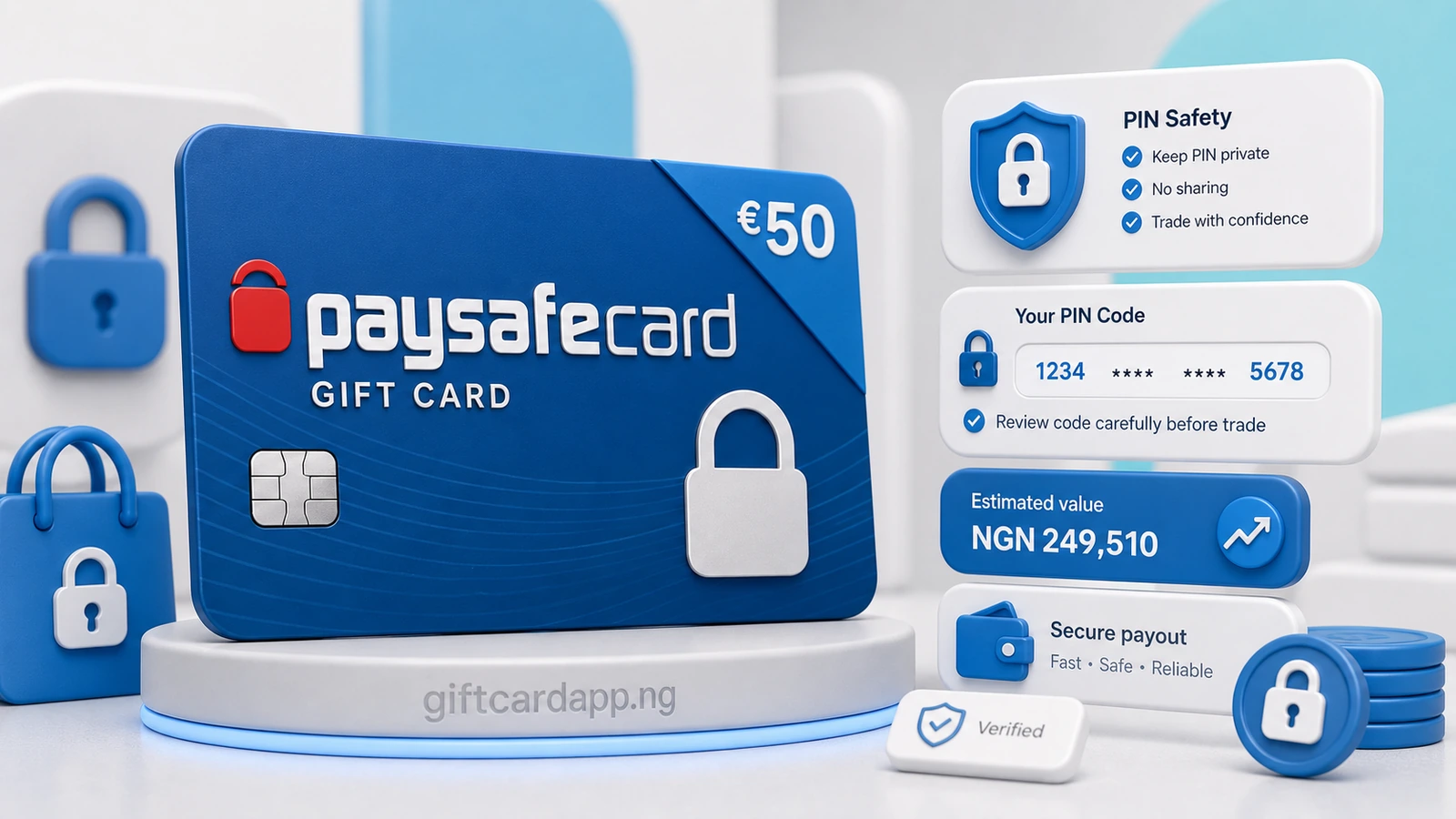
Gift Card trading terms help Nigerian sellers compare the exact card, route and evidence needed without exposing a code too early. A rate or receipt can inform a review, but neither guarantees acceptance, a locked quote or payout.
Essential Gift Card trading terms
Route
A route is the specific combination of brand, issuing market, currency, denomination, format and evidence requirements. A US USD eCode and a UK physical card can be different routes even for the same brand.
Rate and estimate
A rate is a dated NGN estimate for a matching route. Check the current Gift Card rates page; an old rate, another country or another format is not a substitute for the card you hold.
Multiplier
Some sellers use multiplier to mean the calculation applied to face value. Confirm the displayed rate, currency, denomination and any stated conditions rather than assuming a single calculation applies to every card.
eCode and physical card
An eCode is delivered digitally by email, an order page or an account. A physical card is plastic or printed. Each format may need different supporting evidence. Use the eCode guide or physical-card checklist to prepare it safely.
Receipt-backed
This means a receipt or order record is available to connect the card to a purchase source. It may reduce clarification, but does not prove authenticity, unused balance, ownership, eligibility or final payout.
Balance, invalid and already redeemed
Balance is the usable value remaining on a card. “Invalid” or “already redeemed” describes a verification result, not something to guess from a photo. Keep redeemable codes and PINs private until an official secure stage specifically requires them.
Manual review and TAT
Manual review means extra checking may be needed. Turnaround time (TAT) is an expected handling window, not a guarantee. A route, proof quality or verification result can change what happens next.
How to use the glossary before submitting
- Identify the exact brand, market, currency, denomination and format.
- Check a current matching route, not a headline figure.
- Prepare readable proof while masking codes, PINs, passwords, OTPs and payment details.
- Read the requested secure step before sharing sensitive information.
Review the verification guide and common submission mistakes before submitting.
Frequently asked questions
Does a route apply to every card from one brand?
No. Market, currency, denomination, format and evidence can make routes different.
Does a receipt guarantee payout?
No. It can support review but does not guarantee acceptance, quote or payout.
Should I send a code to ask for a rate?
No. Use non-redeemable route details first and keep codes and PINs for an official secure stage only when required.
What does manual review mean?
It means extra checking may be needed; it does not promise or predict an outcome.
Why can an estimate change?
Routes and market conditions can change, and the final result depends on the exact card and verification.
 How to Share Gift Card Details Safely in NigeriaJun 20, 2026
 Why Gift Card Quotes Change Before Payout in NigeriaJun 23, 2026
 How to Sell Gift Cards for Cash in Nigeria (2026 Guide)Jun 12, 2026