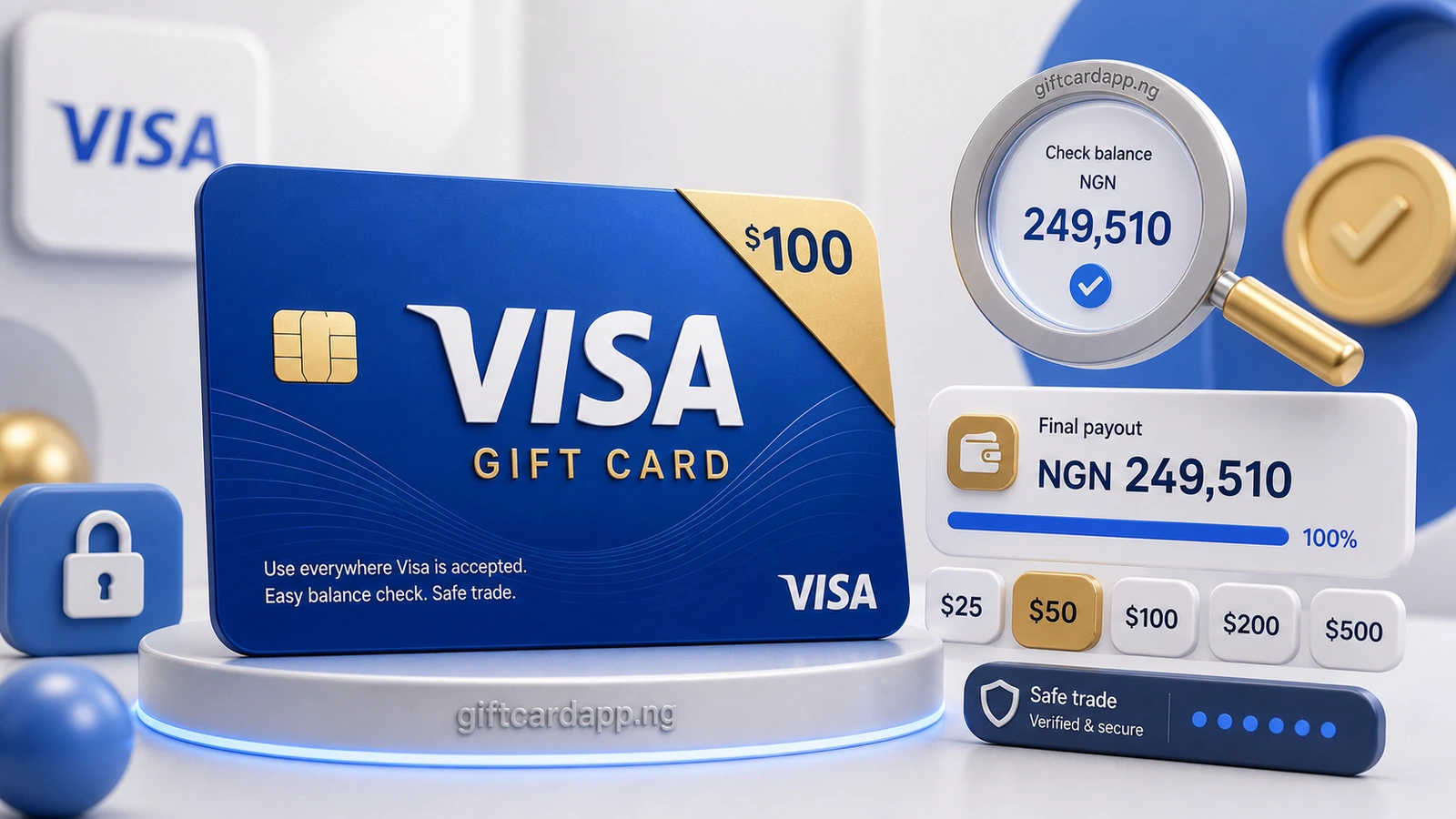
A $25, $50, $100 or $500 Gift Card does not automatically use the same rate per dollar. In Nigeria, the current naira estimate can depend on the exact denomination, brand, country or currency, card format, supported route and verification result.
Denomination is one input, not a guarantee. A larger card is not automatically worse, a smaller card is not automatically faster, and no value guarantees acceptance, a rate, review time or payout.
Why Gift Card denomination can affect an estimate
A rate page often needs to identify more than the brand. It may distinguish country, currency, physical card or eCode, receipt status and exact value. The active route may support several denominations equally, use separate table values, set an amount limit or require the total to be reviewed as a batch.
Amount-specific values and unit-rate calculations
One denomination may have a current table value while another uses the route’s current unit rate as a fallback. This is why copying the result for a $100 card and multiplying it by five may not reproduce the displayed $500 estimate.
The Gift Card rate multiplier guide explains the unit-rate calculation. For a worked benchmark without freezing a live market number into this article, see how a $100 Gift Card becomes a naira estimate.
Route availability and denomination limits
A currently supported route may accept only certain values or apply a different handling rule above or below a threshold. Another route may treat the same values uniformly. These conditions can change, so an old screenshot or a quote for another denomination is not proof of the current result.
Format and proof can change the comparison
A $100 physical card and a $100 eCode are not necessarily the same product. Country, purchase source, receipt context, current status and required evidence can differ. If two estimates differ, compare all of those details before assuming denomination caused the change.
Current Steam denomination comparison
These US Steam examples show why each amount should be checked instead of copying a result from another denomination. A listed amount can use its own table value; otherwise the current unit rate is the fallback. The figures are dated estimates, not guaranteed quotes or payouts.
Card value Rate per USD 1 Estimated naira value USD 25 NGN 1,058 NGN 26,439 USD 50 NGN 1,058 NGN 52,878 USD 100 NGN 1,058 NGN 105,755 USD 500 NGN 1,058 NGN 528,775
How to read a denomination comparison
- Confirm the same product. Compare the same brand, country or marketplace, currency and format.
- Check the timestamp. A historical result and a current estimate answer different questions. The guide to rate history versus a live rate explains the distinction.
- Separate face value from unit rate. The card’s printed value is not the naira-per-unit multiplier.
- Look for amount-specific figures. Do not assume a displayed $100 result applies unchanged to $25 or $500.
- Review the final card details. The route, evidence and card status still need confirmation.
| Comparison | What is being tested | Common mistake |
|---|---|---|
| $25 vs $100 of the same product | Whether both amounts use the same current unit rate or separate table values | Multiplying one displayed estimate without checking the other denomination |
| One $100 card vs five $20 cards | One code compared with a five-card batch | Treating equal total face value as identical processing |
| $100 physical vs $100 eCode | Format, source and evidence requirements | Attributing every difference to denomination |
| Today’s $100 vs an older $100 screenshot | Current route data compared with rate history | Using an old result as a current promise |
How to present a multi-card batch
Give the individual denominations as well as the total. “Five Apple US eCodes: $50, $50, $100, $100 and $200” is more useful than “Apple total $500.” The detailed list shows whether every card shares the same brand, country, currency, format and purchase source.
- List one denomination per card or code.
- Separate physical cards from eCodes.
- Keep countries and currencies clearly labelled.
- Match each receipt or order record to the correct card.
- Ask whether one route applies to the whole batch or whether any item needs a separate estimate.
Copyable batch summary:
Brand: [brand]
Country/currency: [country and currency]
Format: [physical or eCode]
Individual values: [value 1, value 2, value 3]
Total face value: [total]
Proof available: [receipt, order email or other evidence]
Organisation can reduce avoidable clarification, but it does not guarantee that every card will use one multiplier or complete on the same timeline.
Why a final result can differ from a benchmark
A benchmark normally assumes that the selected brand, country, format and denomination are correct. The result can change if the submitted card follows a different route, has a different value, needs different evidence or does not match the original description.
The broader Gift Card rates in Nigeria guide covers route changes, multipliers and post-quote differences. Use the current pricing tool close to submission time rather than treating this article’s examples as an offer.
Frequently asked questions
Why can a $25 Gift Card use a different rate from a $100 card?
The platform may use amount-specific table values, a unit-rate fallback or different route rules for the two denominations. Check the same brand, country, currency and format before comparing them.
Can I multiply a $100 Gift Card estimate by five for a $500 card?
Not safely without checking the $500 denomination. The larger amount may use the same unit rate, a separate table value or another current route rule.
Do five $20 codes count as one $100 Gift Card?
No. They have the same total face value, but they remain five separate codes and may require separate matching records or checks.
Do larger Gift Cards always get lower rates?
No. There is no universal direction. The current product, route, denomination table, demand and verification result determine the estimate.
Does a denomination comparison guarantee my final payout?
No. It is an estimate based on the selected details and current data. The exact card, route, status and evidence still need verification.
 Why Gift Card Quotes Change Before Payout in NigeriaJun 23, 2026
 How Much Is a $100 US Gift Card in Naira?Jul 3, 2026
 Gift Card Rate Multipliers Explained for NigeriaJul 2, 2026