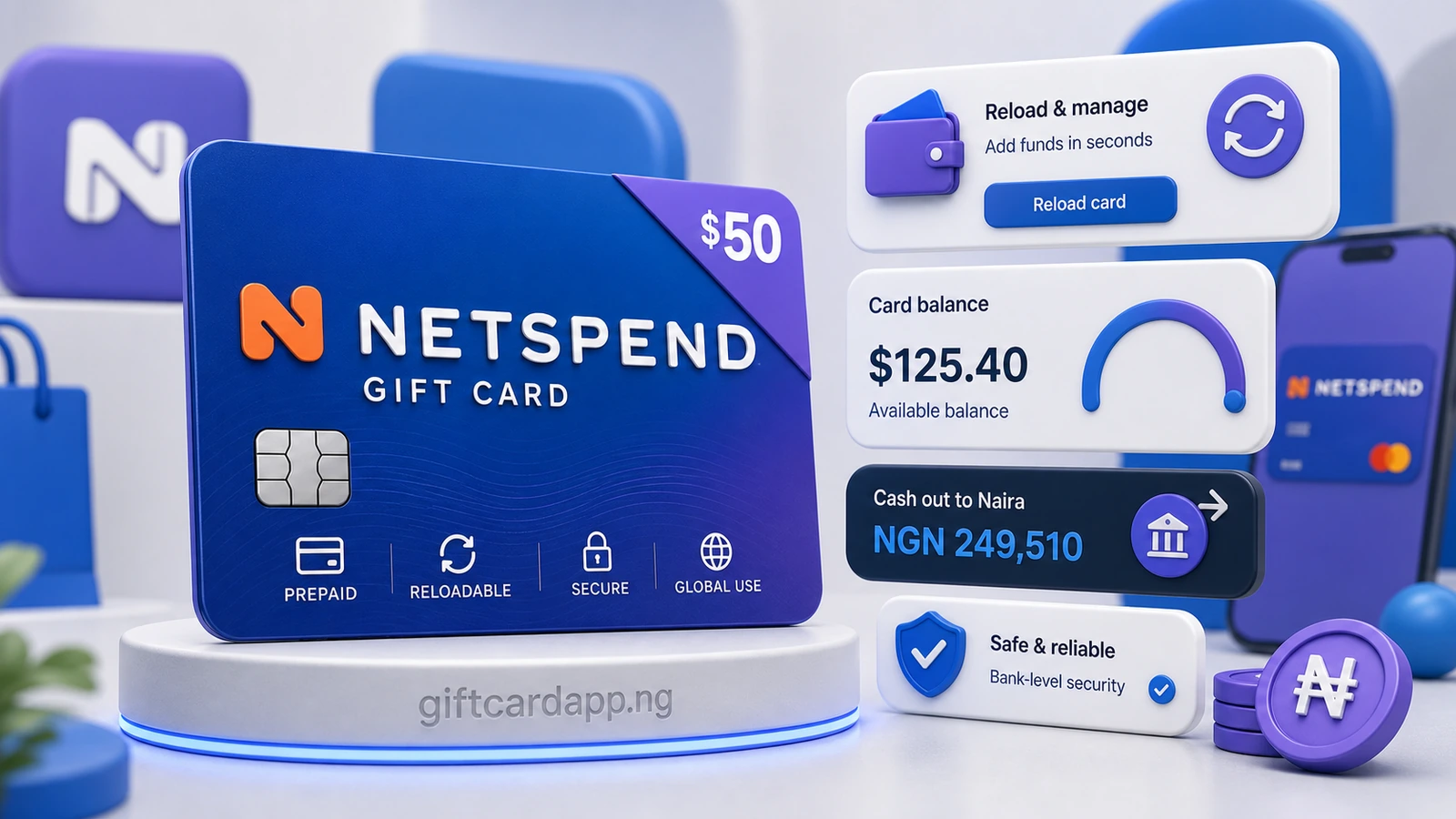
Safe Gift Card trading is about sharing enough information to identify a route while protecting anything that can transfer value or expose your account. For Nigerian sellers, the main risk is often not the card photo itself. It is sending a redeemable code, PIN or sensitive order detail too early because someone promises an unusually high NGN payout or asks you to act immediately.
Use a simple rule: show route-identifying details first, mask sensitive details until the official secure submission stage specifically requires them, and never post redeemable credentials publicly. Clear proof can reduce clarification, but it cannot guarantee authenticity, balance, ownership, eligibility, acceptance, a quote or payout.
What you can show, mask or keep private
Before sharing a photo or screenshot, separate information that describes the Gift Card from information that can redeem it or identify you personally.
| Usually useful for route identification | Mask until a secure step requires it | Never post publicly |
|---|---|---|
| Gift Card brand and denomination | Redeemable code, scratch code, PIN or claim code | Full Gift Card credentials or code/PIN combination |
| Issuing country or currency | Unneeded order number or barcode | Account password, one-time code or login details |
| Receipt retailer, date and product context | Personal email address, home address or payment details | Identity document images in public posts or ordinary chats |
| Physical or digital format | Unused account or delivery information | Payment-card numbers, CVV or bank details |
Show only the fields needed to describe the exact card: brand, country, currency, value, format and available proof. A US card should not be described as a universal card, and a rate estimate for one route should not be applied to another. Check the matching route on the current Gift Card rates page before deciding what to submit.
Prepare proof without exposing value
For a physical Gift Card
Take a clear image of the whole card with the brand and denomination visible. Cover the redeemable code and PIN area before sharing an initial photo. If you have a receipt, capture it separately so the retailer, date and relevant product details remain readable while unrelated purchases, payment details and addresses are hidden.
The physical Gift Card photo checklist explains how to avoid cropped corners, glare and accidental code exposure. A readable image helps someone understand the card; it does not prove that the card is unused or will be accepted.
For an eCode or email-delivered Gift Card
Keep the full code out of public posts, social media, forwarded chats and ordinary support messages. A safer first screenshot can show the retailer name, value, currency, date and delivery context with the code and unrelated account information covered. Redact addresses, payment details and other purchases that are not needed for review.
Use the eCode email and order screenshot guide to decide which fields to retain and which to mask. Do not share a password, one-time passcode or account login as proof of purchase.
Use a calmer submission process
- Describe the card accurately. State the brand, issuing market, currency, denomination, format and whether a matching receipt or order record is available.
- Check the matching route. Confirm that the details you selected match the card rather than relying on a screenshot, another brand’s rate or an old conversation.
- Review the next requirement. Read what the official submission step asks for before sharing any sensitive field.
- Use the official secure channel when required. Share redeemable information only at the secure stage specifically provided for that purpose, never in a public reply or unverified direct message.
- Keep your original records. Retain the original images, receipt or order record and a timeline of what you shared.
This approach can reduce avoidable back-and-forth, but it does not guarantee a faster review or a particular outcome. The verification guide and common submission mistakes guide can help you check the details before you send them.
Warning signs before you share a code
Pause when a person or page pressures you to reveal a full code before the card, route or next step is clear. Be especially careful with messages that use an unexplained high NGN amount, “instant load” language, changing instructions or a request to move the conversation away from the official process.
- You are asked for a code or PIN before the basic card details are understood.
- A promised rate is far above the current matching route without a clear explanation.
- You are told to act immediately or discouraged from checking the route yourself.
- The requested proof includes a password, OTP, payment-card detail or other account credential.
- The recipient changes the requested information after receiving a sensitive image.
A high offer alone does not prove fraud, and a normal-looking message does not prove safety. Slow down, keep a record and use the official route for the transaction you choose.
If you already exposed a code or PIN
Stop sending further screenshots or details. Preserve the original order record and the conversation timeline, then contact the official support channel for the service you used as soon as possible. Do not send additional codes, passwords or identity documents to someone who says they can “fix” the issue through a private message.
Once a redeemable credential is visible, its value may be at risk. Keep the facts clear: what was exposed, where it was shared and when. Avoid making new promises or accusations while you gather the information needed for support.
Frequently asked questions
Can I show the front of a physical Gift Card?
Usually, yes, when it identifies the brand and denomination without exposing the redeemable code, PIN or other prepaid credentials. Check that reflections and cropped edges do not reveal covered information.
Should I blur my receipt?
Mask unrelated personal, payment and address details. Keep the retailer, date, value and product context readable when they are needed to connect the receipt to the card.
Should I send a full code to get a rate?
No. Route identification normally starts with non-redeemable details. Keep full codes and PINs for the official secure stage only when they are specifically required.
Can a clear receipt guarantee acceptance or payout?
No. A matching receipt may reduce clarification, but it does not prove authenticity, unused balance, ownership, route eligibility, acceptance, a quote or final payout.
What should I do if someone rushes me to send a PIN?
Pause, do not send the PIN, and verify the route and next step through the official channel for the service you intend to use. Keep a record of the request if you need support later.
 Five Ways to Keep Your CardFlow Account SecureJun 11, 2026
 How to Compare Gift Card Buyers Safely in NigeriaJun 21, 2026
 Common Gift Card Submission Mistakes to AvoidJul 4, 2026