

A beginner guide to physical gift cards and eCodes, explaining proof differences, route selection, verification risks, and payout expectations.
 Physical card
Photos, packaging, and receipt context matter.
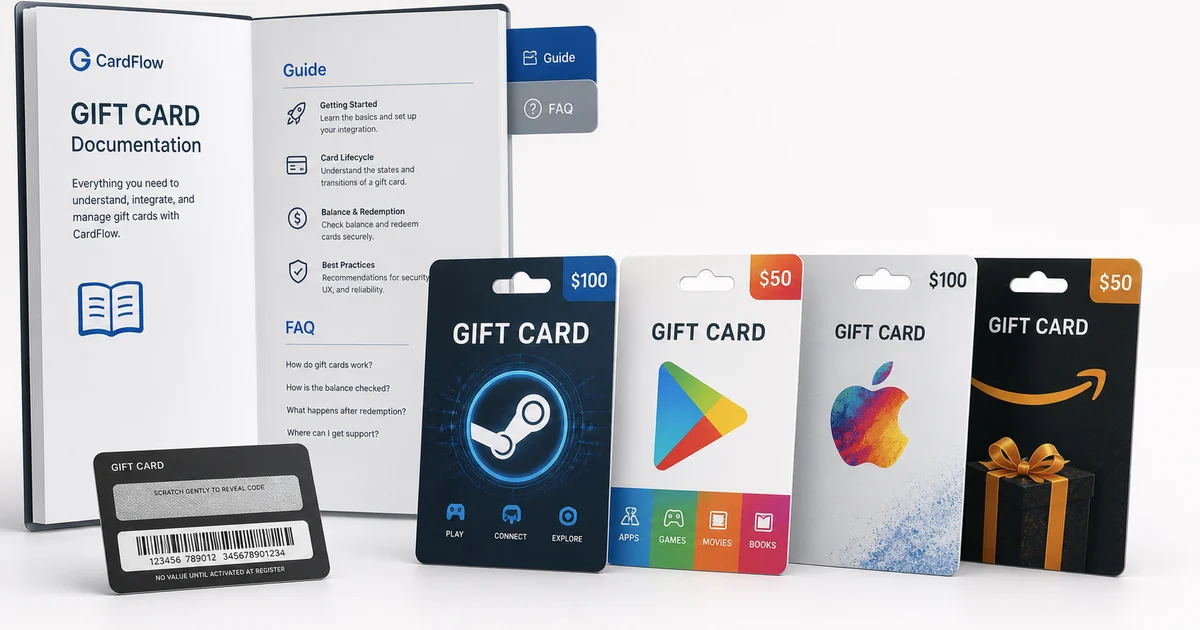
A physical card often needs the full card view, denomination, receipt, and a route that supports that exact format.
 eCode
eCode
Email proof and order source become more important.
Digital cards can still be country-locked, so the source, currency, and original order context should be clear.
Format changes the evidence needed
A physical card may require card photos and receipt context. An eCode may require email proof, order details, or a screenshot that shows the source and value. The selected route should match the actual format.
Country and currency still matter
Digital does not mean global. Apple, Google Play, Steam, and other brands can still be country or currency specific. Users should confirm the region before relying on an estimate.
Receipts can look different
A store receipt, online order confirmation, email purchase proof, or account receipt can each help verification in different ways. The important point is that the proof should match the card and value being submitted.
Do not force the wrong route
If a card is physical, do not submit it as an eCode just because the estimate looks better. Route mismatch can delay review or change the final payout.
 Apple Gift Card
NGN 87,226.00 / USD 100
Apple Gift Card
NGN 87,226.00 / USD 100
 Steam Gift Card
NGN 99,186.00 / USD 100
Steam Gift Card
NGN 99,186.00 / USD 100
 Razer Gold Gift Card
NGN 110,191.00 / USD 100
Razer Gold Gift Card
NGN 110,191.00 / USD 100
 Google Play Gift Card
NGN 85,891.00 / USD 100
Google Play Gift Card
NGN 85,891.00 / USD 100
 Amazon Gift Card
NGN 100,494.00 / GBP 100
Amazon Gift Card
NGN 100,494.00 / GBP 100
 Visa Gift Card
NGN 19,326.00 / USD 100
Visa Gift Card
NGN 19,326.00 / USD 100
FAQ
Are eCodes always faster than physical cards?
Not always. eCodes can be convenient, but review still depends on country, route, proof quality, and whether the code details match the selected option.
Can a physical card have a different rate from an eCode?
Yes. Physical and digital formats can follow different route rules and proof expectations.
What should I check before submitting?
Check brand, country, currency, denomination, format, receipt or source proof, and the current route estimate.
